


The Pachote: Guardian of the Dry Season, Keeper of Ancient Memory
By Professor Maliek – Santa Teresa Dirt Road Series
Some people look down to find their answers.
Me? Sometimes I have to look up.
Not because the ground has stopped speaking — it never does — but because along our Pacific edge, towering above the maritime zone of Malpaís and northern Santa Teresa, there are elders who write their own scripture against the sky.
The pachote is one of them.
Walk the maritime zone in Mal País or north Santa Teresa near the end of the dry season. The earth is pale. The grass brittle. The air tastes like dust and salt.
And then you see it.
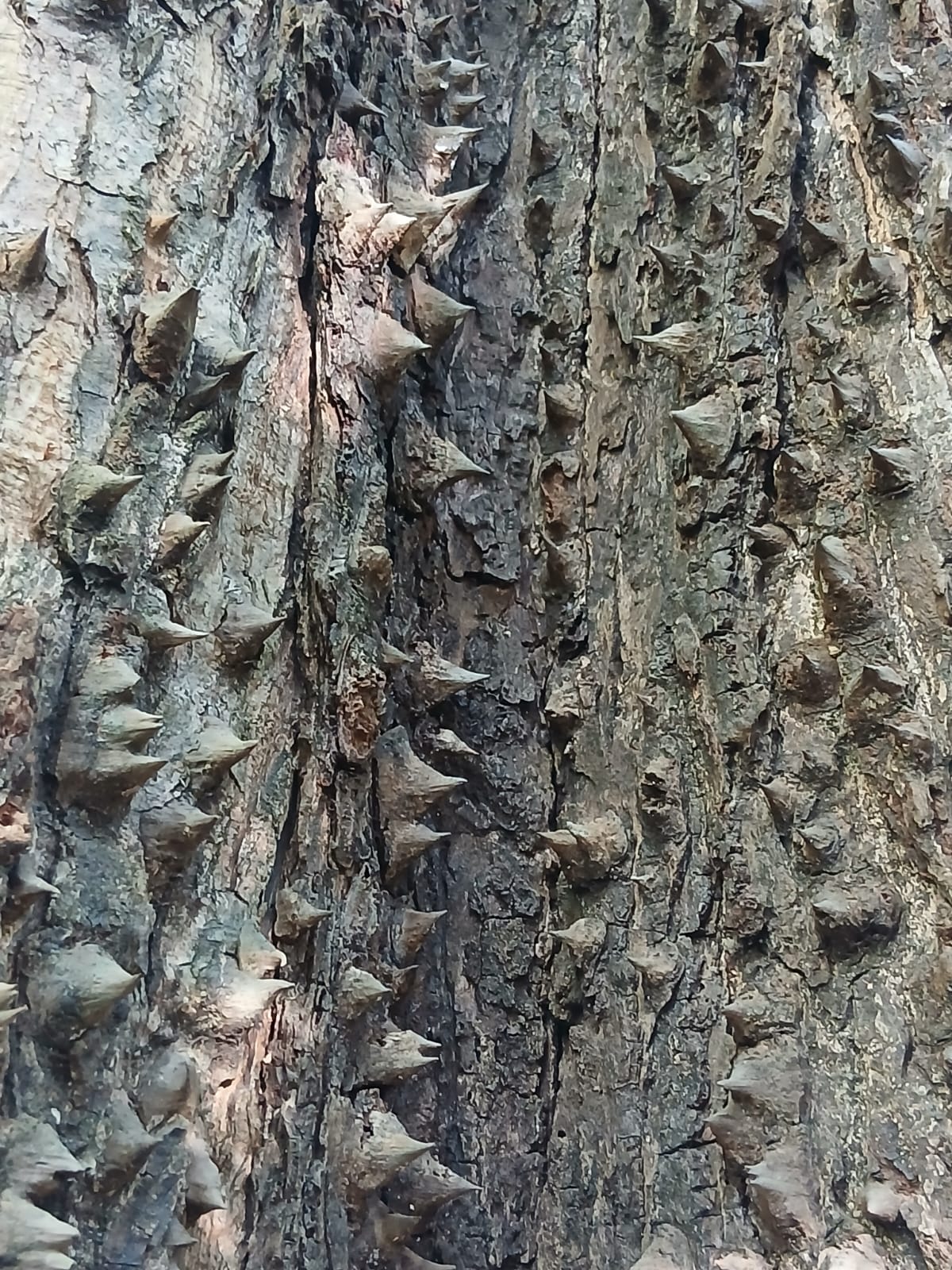
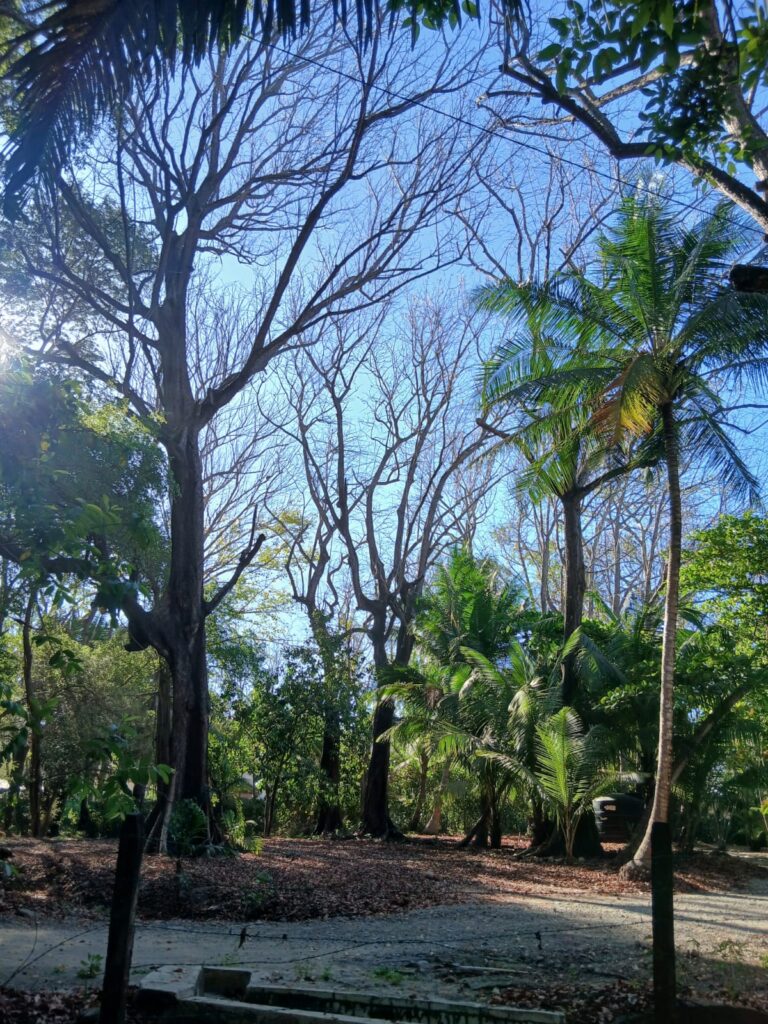
A towering trunk armored in spikes — bare, unapologetic, leafless against the burning sky.
The pachote.
Scientifically known as Pachira quinata, this giant of the tropical dry forest does something that stops you mid-stride. Just when the landscape feels exhausted, just when everything looks stripped and finished, the pachote lets go of its leaves entirely — surrendering to the sun as if it trusts what comes next.
And then it blooms.
White flowers burst from its naked branches, luminous against the harsh blue. They last only a short while — delicate, edible, slightly sweet. Yes, they can be added to salads in small quantities, gathered respectfully from clean trees, a brief seasonal offering from a giant who otherwise looks untouchable. Soon after those blossoms fall, the old-timers nod quietly:
The rains will come within a month or two.
The pachote does not read calendars.
It reads light.
It reads soil moisture.
It reads the subtle tilt of the earth toward the sun.
Even here — where newcomers from the north sometimes say there are “no real seasons” — the trees know better. The land is speaking constantly. You just have to look up.
Armor from Another Age
Stand close to a mature pachote and run your eyes along its trunk. The bark rises in thick wooden cones — brutal, sharp, uncompromising. Step on one and you will not forget it. The wound can linger for months if wood fragments remain embedded. Locals swear by rubbing fresh lime on the injury — not to neutralize venom (the spines are not truly poisonous), but likely to help clean and disinfect the puncture.
But here’s the deeper question:
Why does a tree this massive need armor like that?
The prevailing ecological theory takes us back over 10,000 years — to the Pleistocene, when Central America was not as we know it. Giant ground sloths once roamed these lands, some the size of small elephants. Massive herbivores pushed, stripped, leaned, and fed with force.
In Africa, acacias evolved thorns to deter giraffes and elephants. In ancient Mesoamerica, pachote may have been defending itself against giants of another kind — megafauna now long extinct.
The predators disappeared.
The armor remained.
What we walk past today along our coastline is not just a tree. It is a survivor of evolutionary pressure from a world long erased. Its spines are fossilized memory. Protection coded into wood.
And somehow, it still stands, and if you stop there — truly stop — at the base of one of these giants along the beach pathways, where the Pacific sun beats down and the tree has dropped every leaf, exposing nothing but trunk and sky… something shifts.
The bark does not look modern. It does not look gentle. It rises in thick, plated ridges and hardened cones like the hide of something that once moved. In the white heat of late dry season, with the ocean wind pushing through the open canopy, you could almost believe you’ve stepped into another era. The spines cast sharp shadows against the leathered skin of the trunk. The wood looks less like bark and more like armor grown slowly over centuries.
Stand beneath it and look up — past the scars, past the twisting grain — and it is not difficult to imagine a landscape far older than cattle trails and surfboards. A time when massive bodies pressed against trunks like this. When heavy-footed herbivores moved through a hotter, wilder forest. When survival required protection measured not in inches, but in evolutionary resolve.
No, dinosaurs did not roam beneath this exact tree — they vanished millions of years before the pachote lineage took root — but the feeling remains. The aesthetic of prehistory. The architecture of endurance. The bark carries a design language that feels Jurassic in spirit: scaled, armored, unapologetically ancient.
And in that moment, under the unfiltered sun of our Pacific coast, you realize something profound — this tree does not merely grow in our present. It carries the posture of deep time.
Fortress for the Iguana
Look higher and you’ll see another ancient creature at home there.
The black spiny-tailed iguana — common along our Pacific coast — thrives in pachote trees. The tall, open canopy offers basking platforms for sun-hungry bodies. The leaf drop during dry season increases visibility, giving iguanas a clear line of sight for predators. And those thick spines? They discourage mammals from climbing.
What once deterred megafauna now protects reptiles.
The pachote becomes fortress, watchtower, thermal sanctuary.
Birds join in too — nesting among branches, feeding on insects drawn to the seasonal bloom. Nutrients cycle. Life layers itself vertically along trunk and limb.
The tree does not simply exist.
It hosts.
It shelters.
It participates.
A Witness to Our Coastline
Forestry estimates suggest pachote trees can live 80 to over 100 years when undisturbed — sometimes longer. Aging tropical trees precisely is difficult; they do not form the neat annual rings of temperate forests. But the size of some coastal pachotes tells a quiet truth:
Many were already standing before roads were paved.
Before boutique hotels.
Before surf culture became an industry.
They have watched cattle trails turn into town roads. They have endured decades of sun, salt wind, and dry-season fires. They drop their leaves, bloom, fruit, rest, and begin again — regardless of our construction timelines.
Dry tropical forest is one of the most endangered ecosystems in Central America. Much has been cleared. Yet along the maritime zone — within that first 50 meters from the ocean — these elders still rise above the scrub, holding their ground.
Medicine, Wood, and Human Use
The pachote’s story also weaves into human hands.
In parts of Central America, bark preparations have been used traditionally for inflammation and external remedies. The wood — known commercially in some regions as “cedro espino” — is valued for carpentry, furniture, and construction. Moderately durable and workable, it has quietly shaped homes and structures throughout the dry forest zone.
Even its flowers — brief and luminous — have found their way into local cuisine in small seasonal gestures.
But like all gifts from an ancient being, they are best taken lightly.
The Mystic of It All
There is something else about the pachote that no field guide can quite explain.
It drops its leaves as the moon shifts and the sun hardens.
It blooms into white against drought.
It announces rain before clouds gather.
It carries armor for animals that no longer walk the earth.
It shelters reptiles older in lineage than mammals.
It feels older than memory.
Walk beneath one at sunset when the sky turns copper and the iguanas settle into their high perches. Listen to the wind move through its branches. You can almost imagine the heavy footsteps of something enormous in the distance — a time when giants pressed against its trunk and it learned to defend itself.
And yet here it stands now, among surfboards and bicycles, dogs and children, cafés and construction cranes.
Ancient.
Seasonal.
Unmoved.
The pachote does not ask for attention. It simply marks the turning of time.
If you want proof that seasons exist here — that the land breathes in rhythms deeper than tourist calendars — look to the maritime zone in Mal País and northern Santa Teresa at the end of dry season.
Find the tree with the wooden armor and the white crown.
Stand there for a moment.
You are not just looking at a tree.
You are looking at a survivor from a world that once was — still blooming, still guarding, still calling the rain.
A Closing Thought
If you find yourself walking the maritime zone at the end of dry season, pause beneath one of these armored giants.
Look up.






Not casually — but with the same reverence you might offer an old cathedral or a mountain peak.
The pachote does not bloom for applause.
It does not armor itself for spectacle.
It simply stands — carrying the memory of megafauna, sheltering iguanas, calling in the rains before clouds gather.
It is proof that time is layered here.
That seasons exist even when they are subtle.
That ancient forces still move quietly among surfboards and sandals.
And if you listen — really listen — you may feel it:
A tree remembering a world long gone.
And a coastline still wise enough to keep it.
Until next time,
Prof. Maliek
Southern Nicoya Resident | Observer of Earthly Phenomena | Collector of Questions