




Costa Rica 2026: A Defining Vote and What Comes Next
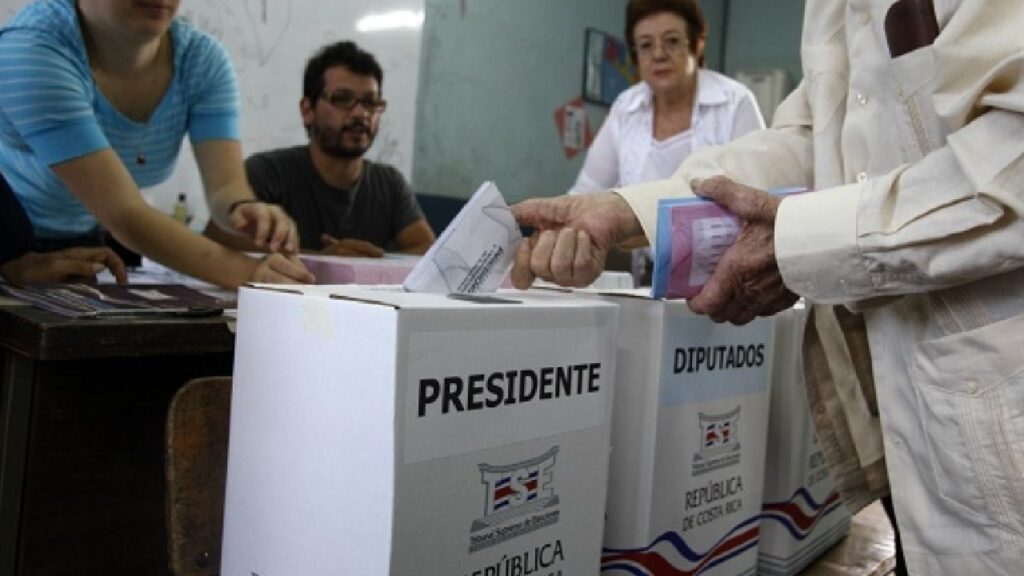
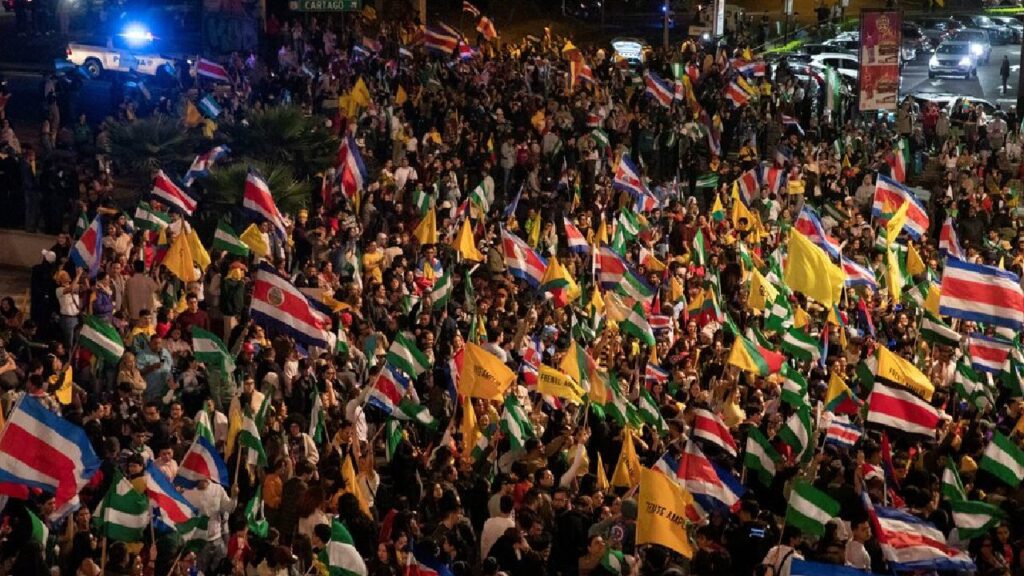
Costa Rica does not take election day lightly. Every four years, the country pauses. Businesses close. Families gather. Flags come out. And by law, alcohol sales stop nationwide — a reminder that voting here is treated as a proud civic ritual.
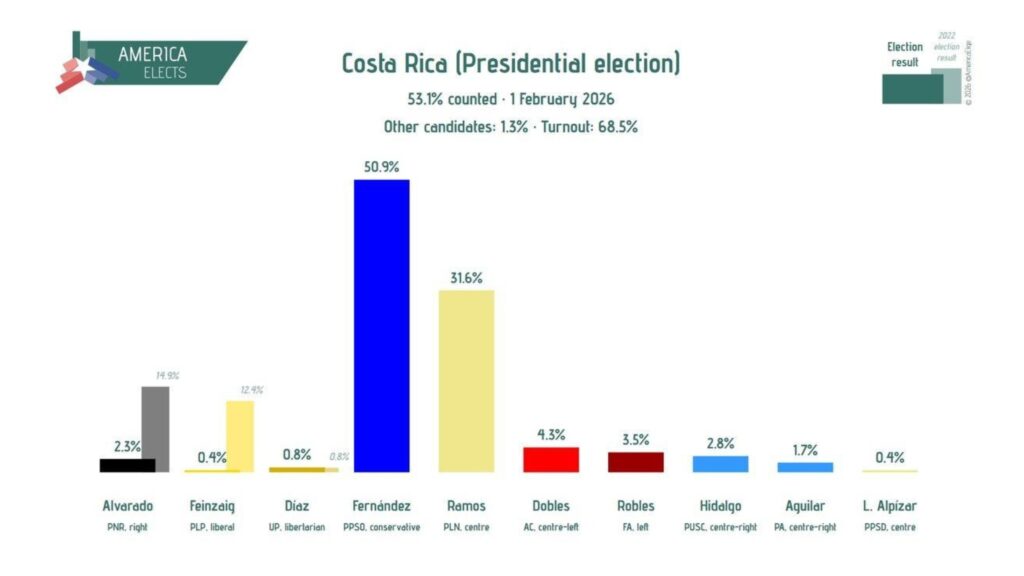
On February 1, 2026, more than 3.7 million registered voters were called to the polls to choose a president, two vice presidents, and the 57 deputies of the Legislative Assembly. Turnout once again showed the strength of Costa Rica’s democratic culture, with participation hovering around the seventy-percent mark — a number many larger democracies can only dream about.
This year’s vote, however, carried a different kind of weight.
A Country Confronting Crime
For decades, Costa Rica built its international identity on stability, education, and peace. No army. Strong institutions. A tourism brand rooted in nature and safety.
But over the past few years, rising homicide rates — largely tied to drug trafficking and organized criminal networks — shook that narrative. The homicide rate climbed to historic highs, placing pressure on communities, law enforcement, and the national psyche.
Security was no longer a background issue. It became the central question of the election.
Even with these rising concerns, Costa Rica remains one of the safest countries in Central America, and the current focus reflects a push to protect that standing rather than a loss of it.
The Win: Security at the Core
President-elect Laura Fernández Delgado won the presidency on a platform that placed public security at the forefront. Her campaign focused on restoring order, strengthening law enforcement capacity, and confronting organized crime more directly than previous administrations.
Among her most discussed commitments:
- Construction and activation of a new maximum-security prison designed to isolate high-level gang and narco leaders.
- Expanded coordination between police, prosecutors, and border control authorities.
- Increased technological investment in ports and airports to disrupt drug trafficking routes.
- Legislative initiatives aimed at accelerating judicial processes in serious criminal cases.
The message resonated: many voters were ready for a firmer response to violence.
Her party also secured a significant presence in the Legislative Assembly, providing political alignment that could allow key security and institutional reforms to move forward more efficiently than in past administrations divided by partisan gridlock.
Why This Moment Feels Different
Costa Rica’s political history is marked by negotiation and moderation. The 2026 election reflected something more urgent — a population demanding results in areas that directly affect daily life: safety, justice, and institutional accountability.
The proposed maximum-security prison represents more than infrastructure. It signals a shift in tone: organized crime will be treated as a structural threat, not an episodic problem.
At the same time, discussions during the campaign emphasized tightening legal mechanisms so that individuals involved in serious criminal activity — including foreign nationals tied to organized crime — can face stronger legal consequences, including deportation when applicable under Costa Rican law.
For a country that has sometimes struggled with slow judicial processes and public frustration over perceived impunity, these measures are seen by supporters as tools to restore confidence in the system.
What the First Year May Look Like
When Fernández takes office on May 8, 2026, the initial months are expected to focus on:
1. Security Implementation
Launching or accelerating construction of the high-security prison, reinforcing police operations in high-risk zones, and formalizing international anti-drug partnerships.
2. Legislative Action
Introducing or advancing bills tied to criminal procedure reform, detention policies, and security funding.
3. Institutional Coordination
Strengthening collaboration between the executive branch, judiciary, and public security forces to reduce bottlenecks in prosecution and sentencing.
Beyond security, the administration has also signaled continuity in economic policy, fiscal discipline, and infrastructure investment — areas that matter deeply to tourism, foreign investment, and job creation.
What This Could Mean for Communities Like Ours
For beach towns, surf communities, and tourism hubs along the Pacific coast, the implications are practical.
- A stronger national security posture could increase visible police presence in certain regions.
- Improved port and customs monitoring may affect logistics and commerce.
- Infrastructure investments could enhance connectivity and access.
- Tourism messaging may lean more heavily on safety and stability as core national strengths.
If the security strategy proves effective, the broader goal is clear: restore Costa Rica’s reputation not just as beautiful, but unquestionably safe.
While public security was a defining issue in the 2026 election, it is important to view this within the broader regional context. Costa Rica continues to rank among the safest countries in Latin America, with long-standing democratic stability, no standing army, and strong institutions compared to many of its neighbors. While crime has increased in recent years — a trend reflected in national reports and one that has understandably shaped public concern — levels remain relatively low when compared to much of Central America. The current national focus on security reflects a proactive response to these changes rather than a loss of the country’s foundations. For residents and visitors alike, Costa Rica remains one of the safest and most stable destinations in the region, even as the country works to strengthen and protect that reputation moving forward.
A Democratic Tradition, Renewed





This election was not only about who won — it was about how the country chose its direction.
Costa Rica once again demonstrated that power changes hands through ballots, not force. The dry law held. The votes were counted. Institutions functioned. A new president prepares to take office under constitutional order.
The coming years will test whether a security-centered mandate can deliver measurable improvements while maintaining the democratic traditions that define the country.
For now, 2026 marks a reset — a moment when voters signaled that safety, institutional strength, and accountability are at the top of the national agenda.
The waves still roll in. The jungle still hums at sunset.
And the country steps into a new chapter, determined to protect both its peace and its future.