



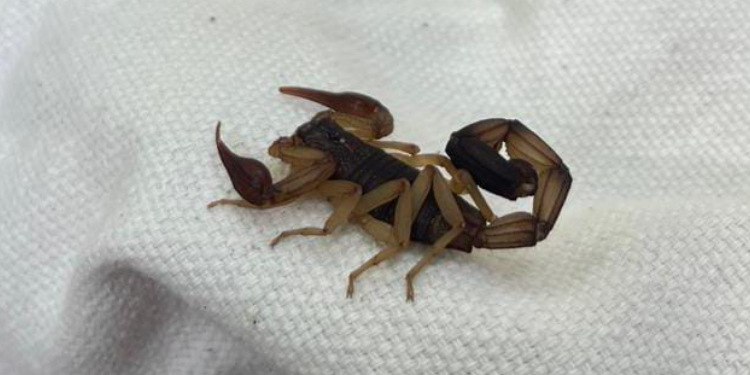
I’ve lived in Santa Teresa for over 30 years, and several months ago, I was telling a friend how I’ve never been stung by a scorpion. She found that hard to believe. “Funny as it may sound,” I told her, “ I can always sense them just before I reach out—like I hear a little whisper of energy warning me to beware.” Well, I guess luck can run out, Or maybe I simply spoke too loudly, and the “Scorpion King” took offense to my self-proclaimed scorpion-whispering abilities. Later that month, as I rushed out the door at 4:30 a.m. I grabbed a jacket I’d left out to air, unaware a sleeve was touching the ground. Half asleep, I didn’t realize a large black scorpion had decided to climb in for the night. When I slid my arm in, he was just as shocked as I was, and before I could react, he stung me repeatedly, and didn´t stop until I got myself and him free. He drops to the ground with a eerie sound. In my panic, and running late now, and not having wisdom from a previous sting, I simply continued on my way. Within 30 minutes, I began feeling numbness in my lips and mouth. I made the mistake of not washing the sting area right away, so I didn’t realize the tip of the stinger was still embedded in my arm. After two long days of pain and discomfort—my mouth, gums, eyes, and even my “third eye” reacting—I finally sat down and googled search scorpion stings to learn the does and don´t after the sting. First recommendation is to wash the area with soap and water, to remove the stinger, that was my first mistake. Since that incident, I’ve encountered at least half a dozen scorpions crossing my floors at night, and I’ve been stung twice more—each time by a scorpion hiding in my clothes or laundry. Fortunately, these were single stings, something like a bee, and far less painful, more of an irritant, but the sensation was eerily similar, like the old venom was still circulating in my bloodstream waking up with the mix of the new venom. In my research for this article, I have found new respect for the Scorpion. I hope you do too!
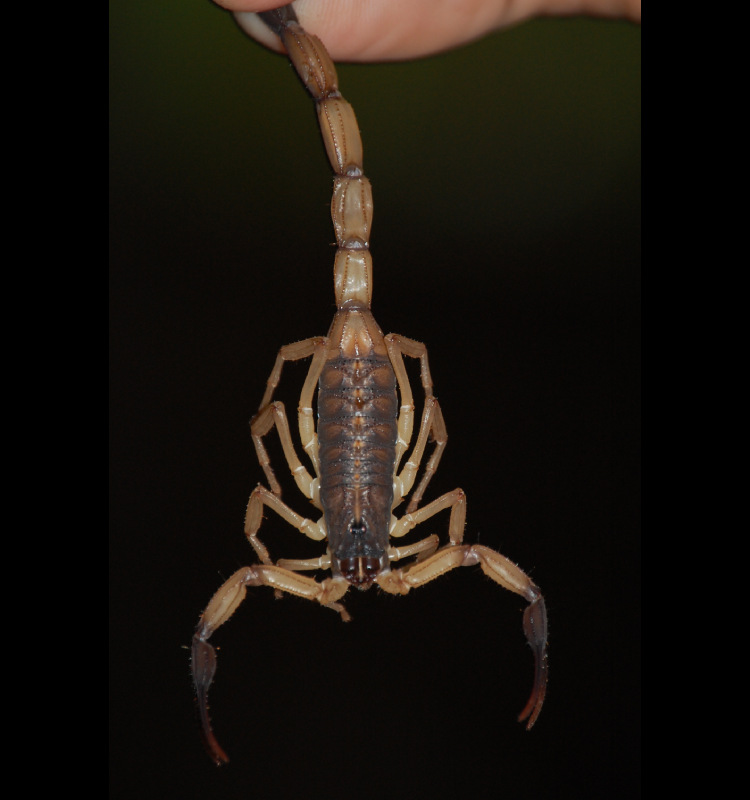
Location: Osa Peninsula, Costa Rica
Photographer: Charles J. Sharp
License: Creative Commons Attribution-Share Alike 3.0 Unported






Scorpions have existed for over 400 million years, (humans only 300,000 years), surviving multiple mass extinctions and adapting to diverse environments, including our own beachside community. Much like the Spider, Bees, Dragon fly and the Cockroach they all share in surviving mass extinctions and becoming the smaller insect we know today.
These ancient arachnids (scorpion), can live anywhere from 4 to 25 years, and have a unique reproductive process. While most require a mate, some species can reproduce without a male through parthenogenesis. Unlike many arachnids that lay eggs, scorpion mothers carry up to 100 live young on their backs for protection until their first molt when they are strong enough to survive on their own. Their resilience and fascinating biology make them one of nature’s most enduring creatures.
Scorpions are a common yet often unseen part of life in our beach village, particularly for tourists who are here for a short vacation. But that can change during the rainy season, when heavy tropical storms flood their burrows and drive them to seek higher, drier ground. This search for shelter often leads them up a tree settling in dry bark, and into homes, where they may hide in dark, places like closets, under furniture, or even inside shoes. While their presence can be startling, these arachnids play a vital role in controlling insect populations, making them an essential part of our local ecosystem. So when possible it is always best to try to scoot them out using a broom. They are usually happy to be moved along, not wanting human contact if possible.
For families with young children, simple precautions can help prevent unwanted encounters. Some of the top scorpion safety tips include, placing nets over cribs and beds, putting toys away in closed sealed box, adds an extra layer of protection, especially in open-air homes. Pets, particularly dogs and cats sense scorpions, reacting with curiosity or caution. Many pet owners have noticed their animals sniffing or pawing at a hidden scorpion, giving an early warning of its presence. However, because pets can get stung, keeping their bedding off the ground and a regularly check in play areas can reduce the risk of painful encounters.
By staying vigilant and making small adjustments to our homes, we can minimize unwanted scorpion encounters while respecting their place in the environment. Clearing away clutter, changing opened laundry baskets to closes sealed options, screening open sloted closet doors, sealing cracks, and using mosquito nets over beds not only protect against scorpions but also other nighttime visitors like mosquitoes and biting spiders. Since scorpions fluoresce under UV light, a quick scan of bedrooms with a UV flashlight before sleeping can help spot any unexpected guests. And if your Rental has been vacant for a week or two, the UV light scanning is a quick way to ensure no unwanted Scorpions. Understanding their habits allows us to coexist with these ancient creatures while keeping our families and pets safe.
The favorite food list of a scorpion include, from the most favorite the Cricket, then Cockroaches, then the common house fly and night moths, also will eat Ants especially when they can find the Ant home/nest and they do the same with Termites, if they can find the nest. Using their top food list can help you identify other ways to prevent scorpion problems, for example, keeping plants away from entrances that attract things like Ants and other insects, keeping you outside garden lights away from the house entrance so moths are not close to entrance points keeping Scorpions away too. Scorpions are easy to catch with a large clear glass, you can then slide stiff paper under and turn it upside down, the Scorpion is out of harms way. You can easily move him outside with out the need to kill him, or step outside and drop him on top of the local termite nest, he will be happy for the feast. lol