



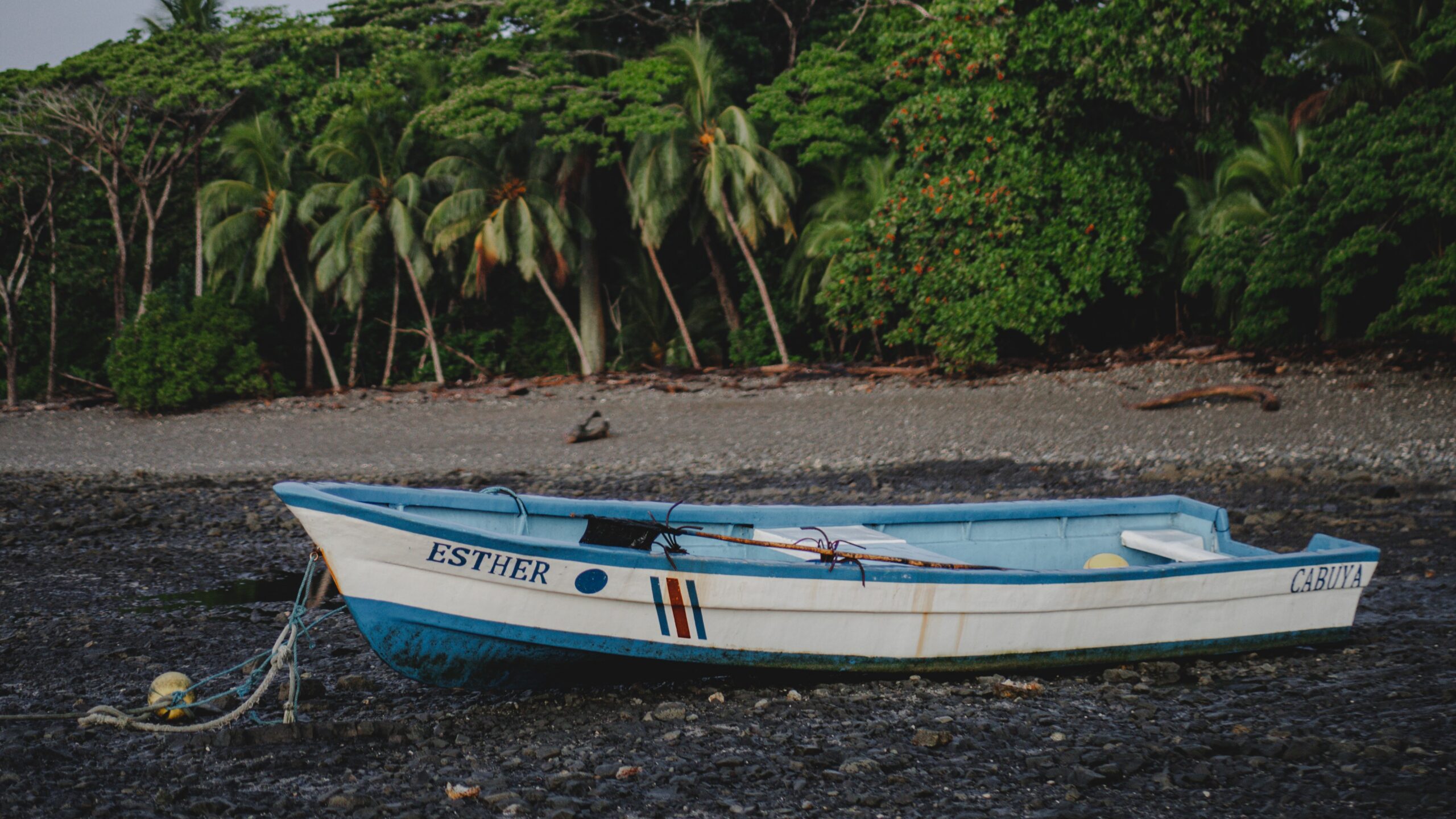
Thinking about moving to Costa Rica? Alan Masis arrived on the Nicoya Peninsula in the 1970s, when Malpaís was still a remote fishing village connected by boats, dirt roads, and a close-knit community. His journey from lawyer to community leader offers a rare look at what life in Costa Rica was really like before tourism transformed Santa Teresa—and what it takes to build a life that lasts.
LIVING THE DREAM – ONGOING SERIES
As this series grows, something becomes clear—these are not just individual stories. Together, they form a living thread that runs through Santa Teresa and Malpaís, Costa Rica, connecting past and present in a way that still holds this community together.
We’ve shared the journeys of people like Bill, walking our roads and cleaning what others leave behind. Yuli, creating healing space through Marpe. Cholo, building something simple and real with Frescazoo. Nancy, bringing yoga into the heart of the village, Roset, creating a space where creativity and childhood can unfold naturally through Creativo. Agora, building a community rooted in movement, connection, and conscious living. And now Alan, whose work quietly helped shape the very ground so many now stand on.
Different lives. Different paths.
But the same current running through all of them.
There is a shared understanding here—something you don’t always see at first. It lives in the early mornings, in the way people greet each other on the street, in the quiet effort behind every small business, every class, every offering. It comes from a time when this place asked more from the people who chose it.
Before the growth, before the attention, before thousands of people arrived looking for a new way of life, there were those who came when there was very little in place. No roads, no systems, no guarantees. Just land, ocean, and the decision to stay and build something with their own hands, step by step.
That foundation still exists.
And today, as the community continues to grow, especially in the years following the pandemic, many new residents arrive without fully seeing what was here before them. Not out of disregard—but simply because the story hasn’t been told clearly enough.
That is why this series matters.
It brings those stories forward. It gives space to the people who helped shape this place, while also recognizing those who continue to contribute to it now. It allows us to see each other more clearly—to recognize that when we pass one another in the street, in a restaurant, in a fitness class, or at the market, we are part of something shared.
Not just a location. A community.
And with that comes something simple, but important—respect. For the people who came before, for the effort it took to build what now exists, and for the responsibility each of us carries as this place continues to evolve.
Because the truth is, the dream people come here searching for today…
did not appear on its own. It was built. And it continues to be built, every day, by those who understand what it means to be part of a community. To be part of a community is the act of saying hello to your neighbors, shopping in local stores for local goods (not order on internet), shaking hands with fellow surfers, stopping on the street to say hello, lending a hand when someone is broken down on the side of the road, sharing a silent moment on the beach at sunset with friends and family. This is Santa Teresa, MalPais and Hermosa.
We hope you enjoy Alan’s unique story and those that follow in this special series.
Midnight Boat to Malpaís: Life Before Roads on the Nicoya Peninsula
Alan still laughs when he talks about his first trip to the Nicoya Peninsula.
He was just a kid, coming from San José with his family to visit his uncle at Mar Azul. This was back in the mid 70´s, and back then there were no roads into the Nicoya Peninsula, so the only way in was by boat from Puntarenas. That alone made it feel like something big. You didn’t just “go” to Malpaís in those days, there was a lot of preparation for conversation about the trip. It started with the late night boat leaving the Puntarenas docks at midnight.
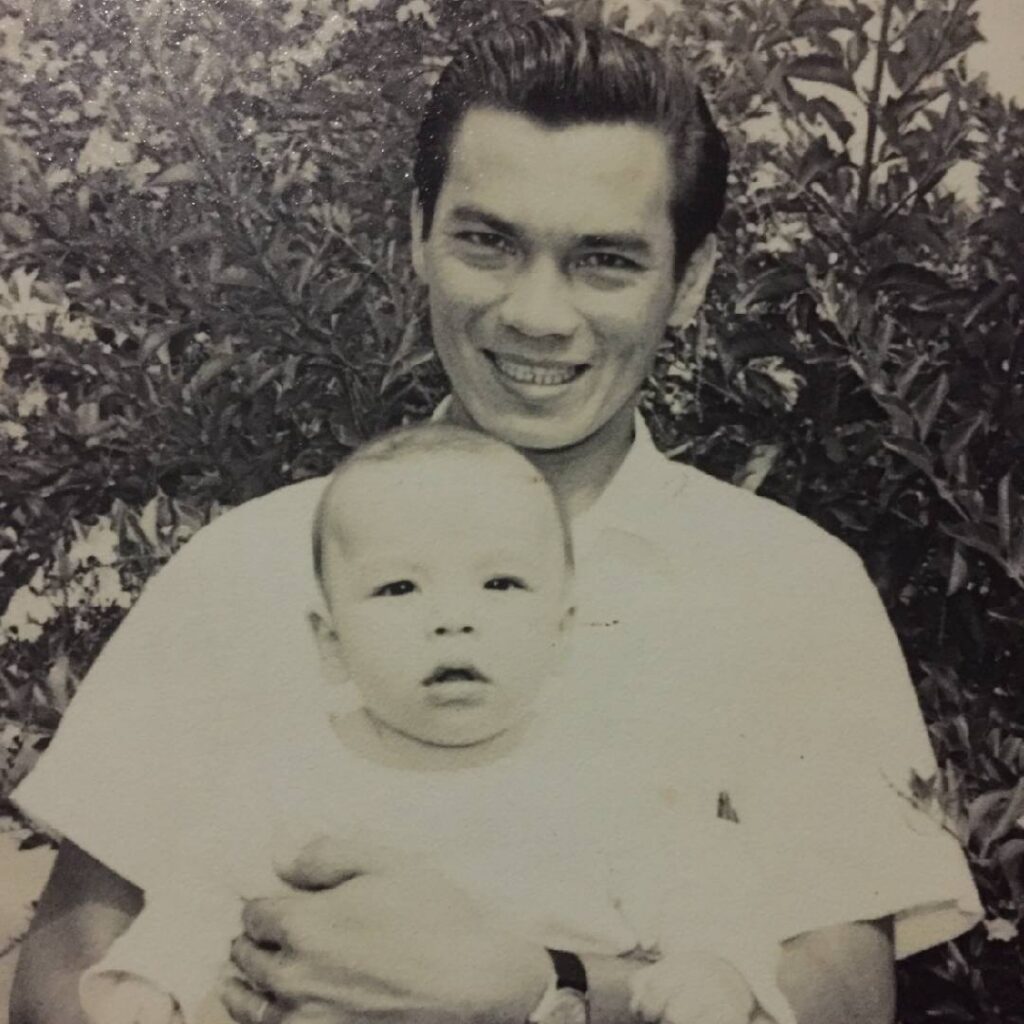
He remembers that part clearly, being awake at an hour that didn’t make sense, everything already feeling different before they even stepped on the boat. And once they did, it was not what you may expect. The boat was small and simple, packed with people, loud from the engine and the voices and the crying kids. Nobody was comfortable. Families squeezed in wherever there was space, boxes of dry food stacked everywhere. During these early years when you planned to come to this area, you had to pack in everything, no roads means no stores, no food for your vacation unless you carried it in with you on the boat ride. Costa Rica coastline was yet to be developed in the 70´s, so when you decided to visit it was a huge undertaking, which for a young boy made everything one big adventure.
“There was nothing here,” he says. “So whatever you needed, you carried.”
For a kid, it wasn’t quiet or peaceful. It was noisy, confusing, a little overwhelming—but also exciting in a way that sticks with you. You didn’t really sleep, moving with the sound of the engine, and people shifting around each time the boat reached another cove it would slow down so people could get off.
By the time morning started to come in, you could feel it before you really saw it. The dark just softened a little, and people started moving more, gathering their things without anyone needing to say much. Alan remembers looking out towards land, but there wasn’t much to recognize—just a stretch of coastline, thick jungle right up against the ocean, no buildings, no sign that this was the place people arrived to.
The last stop on this long boat ride was when they reached MalPais, coming around the corner from the Cabo Blanco park (which was privately owned land then, not a park at all), it was already 9 or 10 in the morning. When the boat finally stopped, it didn’t feel like an arrival the way you’d expect. No dock, no structure, nothing waiting. The boat just sat offshore, and one by one, people started getting off. Straight into the water.
He remembers watching that, trying to make sense of it as a kid, seeing adults step down holding their bags high, passing babies from one set of arms to another, chickens flapping, boxes lifted above their heads so nothing would get wet. And then it was his turn, stepping down into the ocean, feeling that moment where you find yourself following the person in front of you, without cause for concern, everyone exit the boat in the same manner.
Reaching the MalPais beach wasn’t the end of it either.
From there, they still had to walk to Mar Azul, carrying everything they brought with them. There were no roads, just narrow trails cutting through the jungle and along the edge of the beach, paths used by horses and the few families who lived here. The sun was already up, the heat starting to settle in, and you just followed along, step by step, because that’s how you got here.
“It was just normal,” he laughs. “That’s how everyone came.”
And once they arrived, life slowed into something completely different. Mar Azul was one of the only places around, run by his uncle and his family. They had a small pulpería, a simple restaurant serving typical Costa Rican food, rice, beans and fish caught fresh each day. With the only generator in the area, Mar Azul became the go to place for the few people that lived in the area. At night, people would gather there just to watch a little television, to sit together, to share the evening because there wasn’t much else.
Some of his strongest memories aren’t even from the journey, but from those quiet moments after. Sitting near the tents on the beach, watching the fishermen repair their nets at the end of the day, getting ready for the next morning’s catch. No rush, no noise, just the sound of the ocean and the rhythm of their hands working. Everyone moved with the Sun, when it rose, we all rose, when it set, it was the signal to gather your things up, and by the time he crawled into the tent, totally exhausted, it was a good solid day of joy.
“That part I never forgot,” he says.
Finding His Path: Law, Music, and Life Beyond Costa Rica
As those early visits settled into memory, life pulled Alan back into San José, into school, into the path that was expected of him. But even then, something from those trips stayed with him. Not in a loud way, not something he thought about every day, but it was there—those long journeys, that coastline, the feeling of a place that lived differently.
His path into law started early, influenced by his father, who started working in maintenance at the Supreme Court. As a boy, walking those halls left an impression on him. There was something about it that stuck—the structure, the importance of the work, the idea that one day he could belong in that world, not just pass through it.
By 1990, he had earned his law degree and stepped fully into that life in San José. He worked in the capital for several years, building his career, starting a family, doing what many would see as the right and steady path forward. At the same time, there was always another side to him that never really left—music.
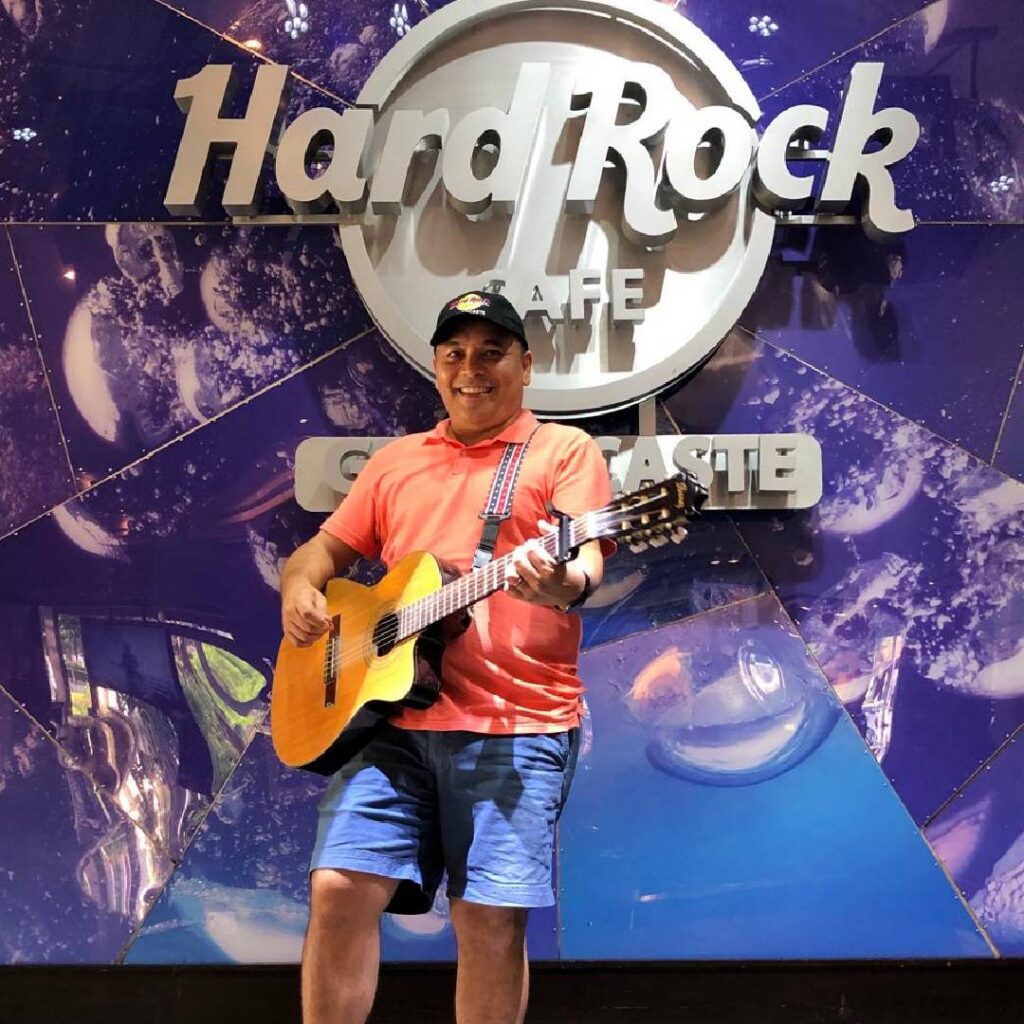
He had been playing since he was young, starting with bass, then moving into guitar, playing in church, learning outside of school because his family made sure he had that opportunity. It wasn’t something he chased professionally, but it was always there, something personal, something that followed him through every stage of his life.
Then, in 2001, life shifted in a way he couldn’t have planned.
He moved to the United States with his former wife, who had the opportunity to perform as a singer. They first settled in Sacramento, and from there found themselves in Las Vegas, stepping into a completely different world than anything he had known before. It was fast, loud, full of energy—stages, performances, casino life—and Alan stepped into it alongside her, working as her sound technician, supporting her while she performed.
“It was a big change,” he says. “Very different from Costa Rica.”
For four years, that was his life. Not courtrooms, not offices, but music, performance, travel, and a rhythm that moved in a completely different direction. It was exciting, and at the same time, it gave him a perspective he wouldn’t have had otherwise—seeing another way of living, another pace, another world.
But even with all of that, there was a point where he knew it wasn’t where he wanted to stay.
When that chapter came to an end, he returned to Costa Rica, back to San José, back to law. And on paper, it made sense. He had the degree, the experience, the path already built in front of him.
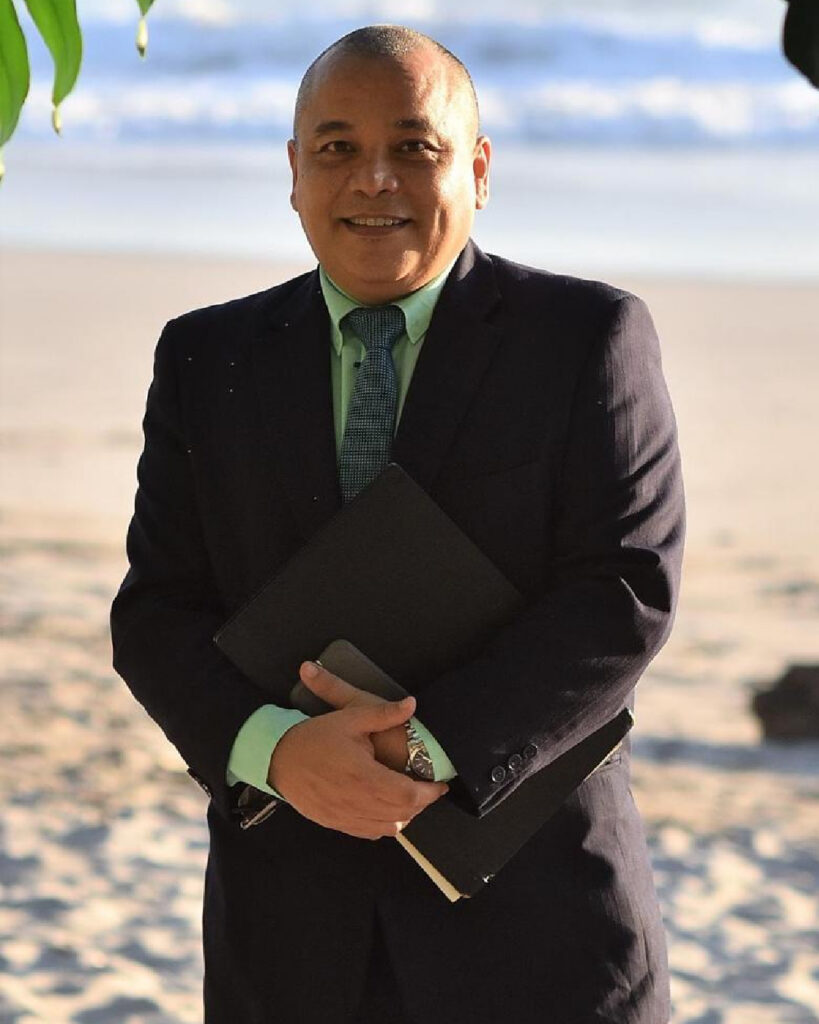
But something didn’t sit the same anymore. He describes it simply—he felt like a small fish in a big ocean. The capital was full of lawyers, full of competition, and the connection he once had to that life wasn’t as strong as it used to be. So he looked back.
Back to the place that had always stayed with him, even quietly. Back to those early memories, the coastline, the slower rhythm, the feeling of something more grounded. And without overcomplicating it, he made the decision. He would move to Malpaís.
Building More Than a Business: Helping Shape a Growing Town
When Alan returned to Malpaís in the early 2005, it wasn’t the same place he had known as a child—but it also wasn’t what it is today. It was somewhere in between. The beginnings of growth were there, you could feel it, but it was still rough, still figuring itself out, still missing the kind of structure people needed if they were going to settle and build something real.
There were very few lawyers in the area at the time. Land was starting to change hands, people were arriving with ideas, with plans to build homes, businesses, a different kind of life, but there wasn’t much guidance in place to help them do it properly. Alan stepped into that space almost naturally, bringing with him his law degree, his experience from San José, and something else that turned out to matter just as much—he spoke English. That opened doors quickly.
He found himself working with a growing mix of people, locals and foreigners alike, all trying to understand how to navigate buying land, securing property, and setting themselves up in a place that still didn’t have clear systems in place. What might have felt complicated or uncertain to others became his daily work, and little by little, he built a reputation as someone you could trust to get it done right.
“I liked that part,” he says. “Meeting people from everywhere, helping them start something new here.”
At the same time, he was building his own life again from the ground up. He started with a small office, renting space from Frank (Frank´s Place), working day by day, client by client, putting the pieces together. It wasn’t instant, and it wasn’t easy, but it was steady.
As the work grew, he moved into a second space, setting up his office above what was Super Muralla, a spot many people still remember. For years, that became his base, the place where deals were made, papers were signed, and where a lot of the early development of this area quietly passed through his hands.
He laughs now when he talks about those days, especially when it comes to how he showed up for work.
“I was never the suit and tie kind of lawyer,” he says.
While most of his colleagues in San José followed a more traditional path, Alan did things his own way. Sandals, shorts, a more relaxed presence—but behind that was someone who took his work seriously, who carried the responsibility of every client with him long after the office closed.
Somewhere along the way, lawyers in San Jose started calling him the “barefoot lawyer.”
he laughs. “… yeah, that fits.”
But behind that easy exterior was a level of commitment that defined his work. He wasn’t interested in cutting corners or chasing volume. Every client mattered, every deal carried weight, and in a place where people were investing their savings, their dreams, their future, that responsibility stayed with him.
He made a conscious decision early on not to work in the courtroom. He knew himself well enough to understand what that would mean—the pressure, the uncertainty, the outcomes you can’t control. It wasn’t the kind of work he could walk away from at the end of the day.
“I couldn’t disconnect from it,” he says. “I would carry the responsibility all the time.”
So instead, he focused on the side of law that helped people build something tangible. Land, homes, businesses—things you could see, things that stayed. And as Santa Teresa and Malpaís continued to grow, so did his role in it. He wasn’t just working in the town.
He was helping shape it.
Somewhere in the middle of all that work and growth, life brought something else into place for Alan.
He met Melissa in Malpaís in 2011, when she came on vacation and ended up camping at his uncle’s place at Mar Azul. It was one of those simple crossings that happen here all the time—people arriving for a few days, a few weeks, not knowing what might come from it. For Alan, it became something lasting, they got married 6 months later.
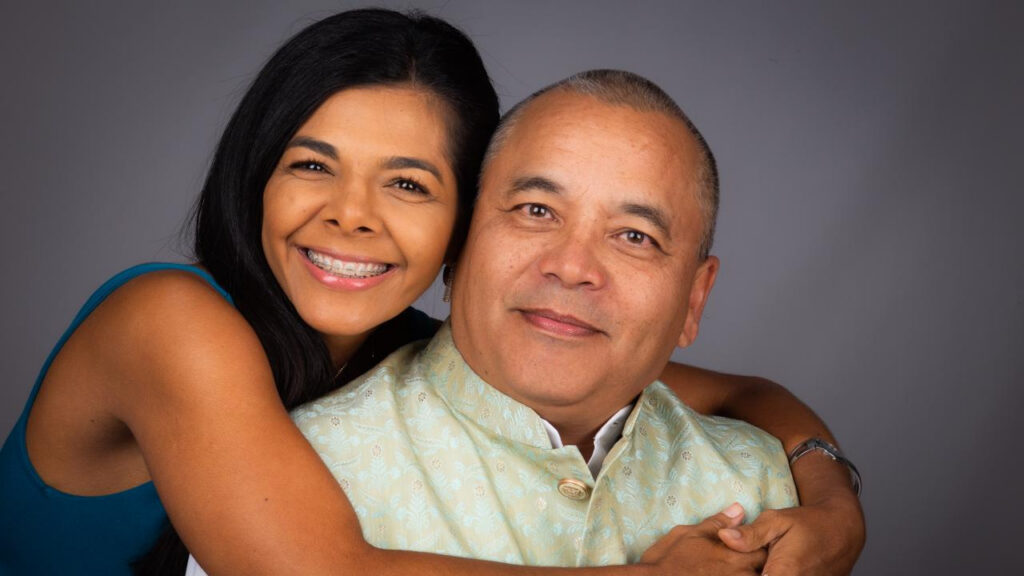
They built their life together in the same way everything else around them was being built at the time—step by step, without rushing it.
By 2012, Melissa was ready to create something of her own. Wanting to stay active and involved, she started a small kindergarten out of their home. It began simply, with a single classroom and a large playground, a space shaped more by intention than by structure. Families responded to it quickly. There was a need for it, and like many things in this town, it grew naturally.
Over time, what started small became something much bigger than they had expected.
They added staff, expanded the space, and for a while, the kindergarten became a central part of their daily life. It also brought Melissa into closer connection with Alan’s work, eventually spending part of her day helping at the law office while continuing to build her own project.
But growth here has its own challenges.
As the kindergarten expanded, it became harder to maintain the level of trust and consistency they wanted. Finding reliable help wasn’t always easy, and what had once felt simple began to carry more weight than it should. After several years, they made the decision to step away from it, choosing to sell while it was still strong.
By 2018, Melissa had transitioned fully into the law office, becoming a steady presence alongside Alan, bringing her own sense of organization and support into a business that continued to grow.

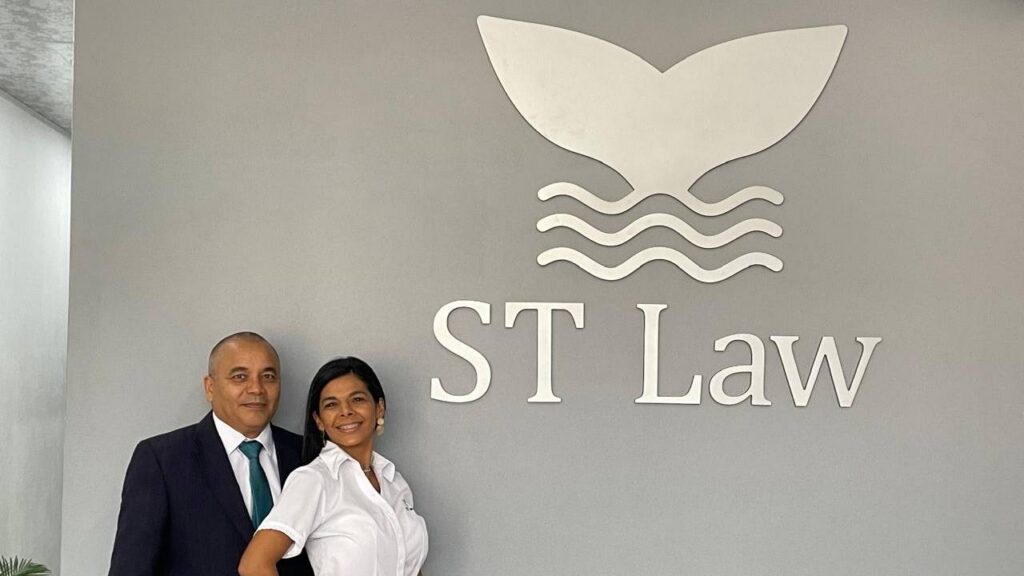
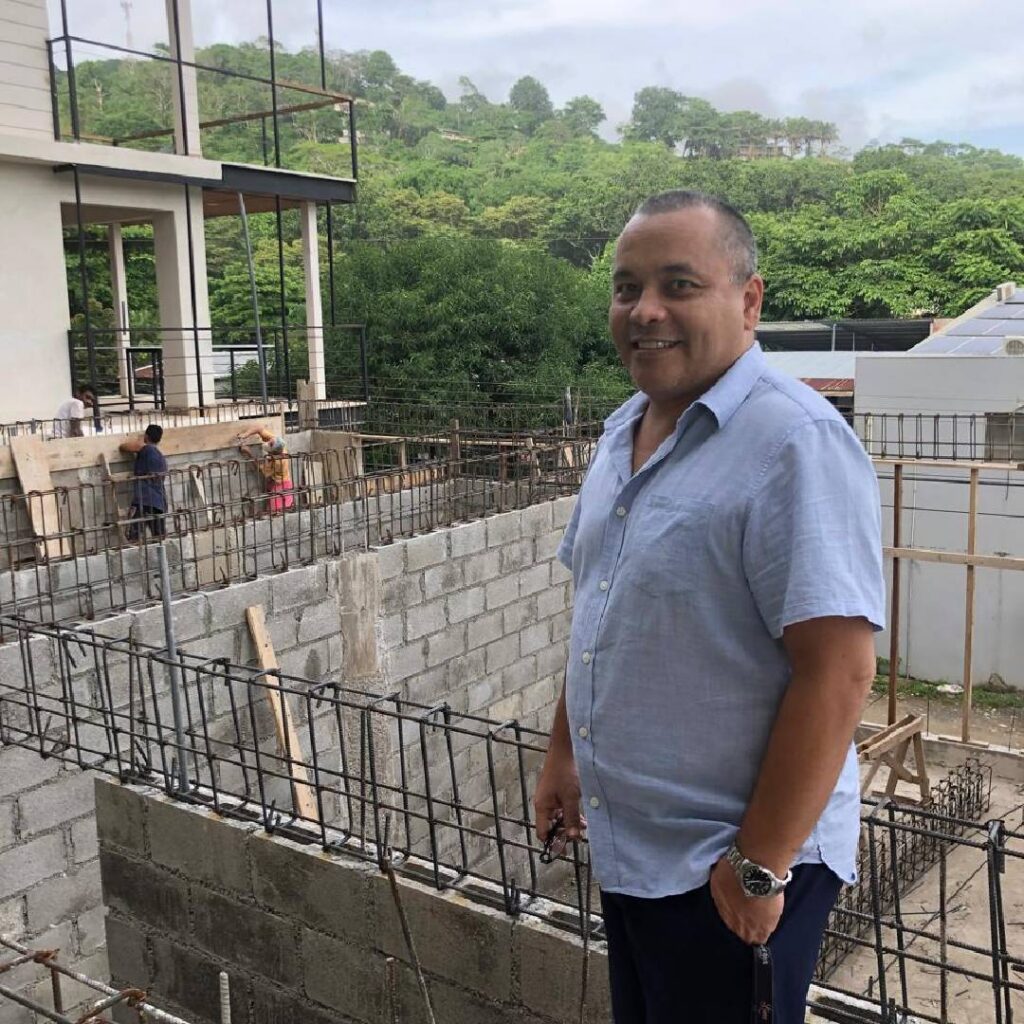
Around that same time, Alan reached a point where he knew it was time to build something more permanent for himself as well.
For years, he had worked out of rented spaces, adapting as needed, but now he wanted something of his own—something that could hold his practice, create room for other lawyers, and provide a sense of stability beyond just the day-to-day work.
They found a piece of land not far from where his office had been, and like everything else they had done, they committed to it fully.
What started as a two-story plan didn’t stay that way for long.
“As we were building, we decided to add a third floor,” he says. “Another opportunity.”
That third floor became rental apartments, another layer to support their future, another piece of the long-term vision they were building together.
But for Alan, this part of the journey came with a different kind of pressure.
For years, he had been the one guiding others through the process—helping clients buy land, navigate paperwork, build their homes, understand the risks. Now it was his turn, and everything that came with it was personal.
All of their savings went into that project. Every decision mattered.
“The stress was different,” he admits. “When it’s your own, you feel everything.”
It was a new experience for him, carrying that level of responsibility not just professionally, but personally. And while the outcome created something lasting—his own law firm, space for others, additional income—it also marked a point where the weight of everything he had been carrying over the years became harder to ignore.
Still, like everything else in his life, he moved through it.
One step at a time.
Full Circle: Music, Travel, and Redefining the Dream
For years, Alan had carried the same rhythm—clients, responsibilities, decisions that didn’t end when the office closed. Even living in Malpaís, even working in sandals and shorts, the weight of the work never really left him. It followed him home, into the evenings, into the quiet moments where most people would disconnect.
He didn’t know how to do that.
“I always felt responsible,” he says. “Even at night, even on vacation, I was thinking about my clients.”
It wasn’t something he complained about. It was just who he was. If someone trusted him with something important, he carried it fully. But over time, that kind of commitment starts to take something with it.
The pandemic gave him something he hadn’t had in a long time.
Space.
Everything slowed down, and in that pause, he found himself looking at his life more clearly than before. Not just at the work, but at what it was costing him to keep going at that pace.
“I felt it was my health and the stress of the law business that was going to destroy any chance of peace and happiness.”
He doesn’t say it dramatically. Just direct. Honest.
At the rate things were going, he knew something had to change.
Not because he didn’t love what he had built, but because he could see where it was leading.
And for the first time in a long time, he let himself consider something different.
“I thought… what’s the purpose?” he says. “To keep working just to make more money?”
That question stayed with him.
For years, travel had always been there, but in a limited way—short trips, always connected back to the office, one foot away, one foot still inside his responsibilities. It was never fully his.
Now, he wanted something else.
“I wanted to see the world. Spend time with my family and friends. Enjoy life more.”





It didn’t happen overnight. It wasn’t a sudden decision to walk away from everything. It was a shift, gradual but clear, where he started to change the way he lived inside his own life.
By that time, he and Melissa had already made another important move.
Back in 2017, they had purchased a bank foreclosure property in Delicias, a quieter, more traditional area, surrounded by farms and long-time neighbors. It wasn’t even something he saw in person before buying.
“I bought it sight unseen,” he says, smiling.
There were complications in the beginning, as there often are, but they worked through them. And by 2021, they made the decision to leave Santa Teresa and move out there fully, building their home from the ground up, creating a different kind of daily life.
Out there, things felt more familiar. More connected. More like the kind of community he remembered.
“We know our neighbors,” he says. “That’s important to me.”
From that place, the rest of the changes started to settle in.
He stepped back from the constant pace of the law business, leaving the day-to-day flow of new clients to his associate, Carlos Augusto Salas, while still staying connected to long-time clients who had been with him for years. The office continues, the work continues—but it no longer carries the same weight it once did.
Now, there is space for the parts of his life that had been waiting.
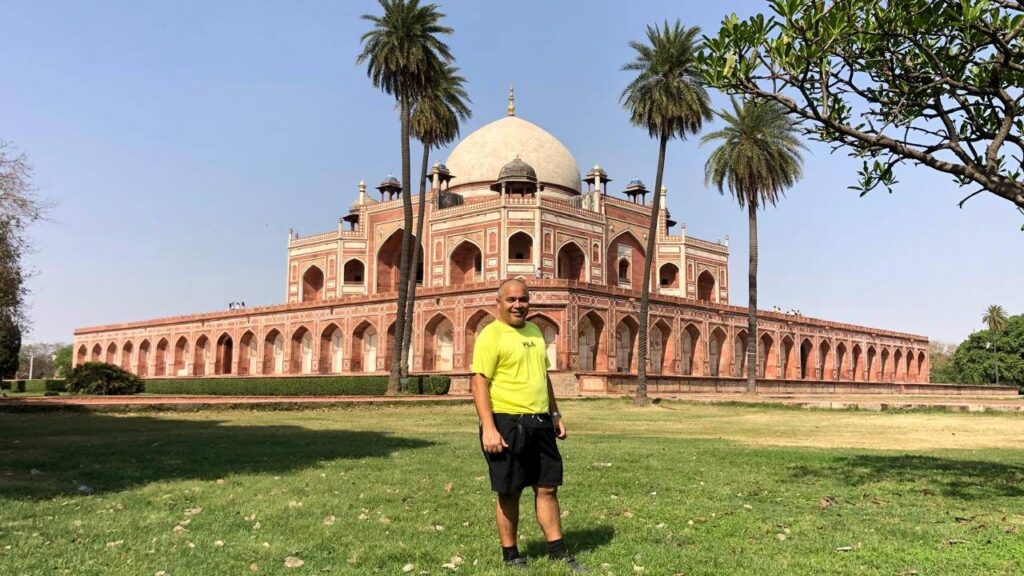
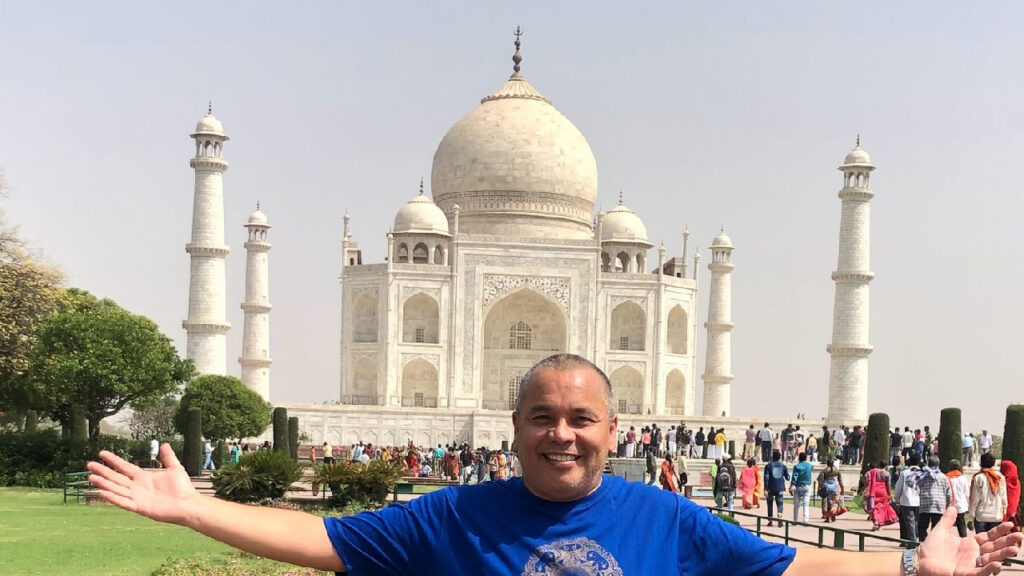
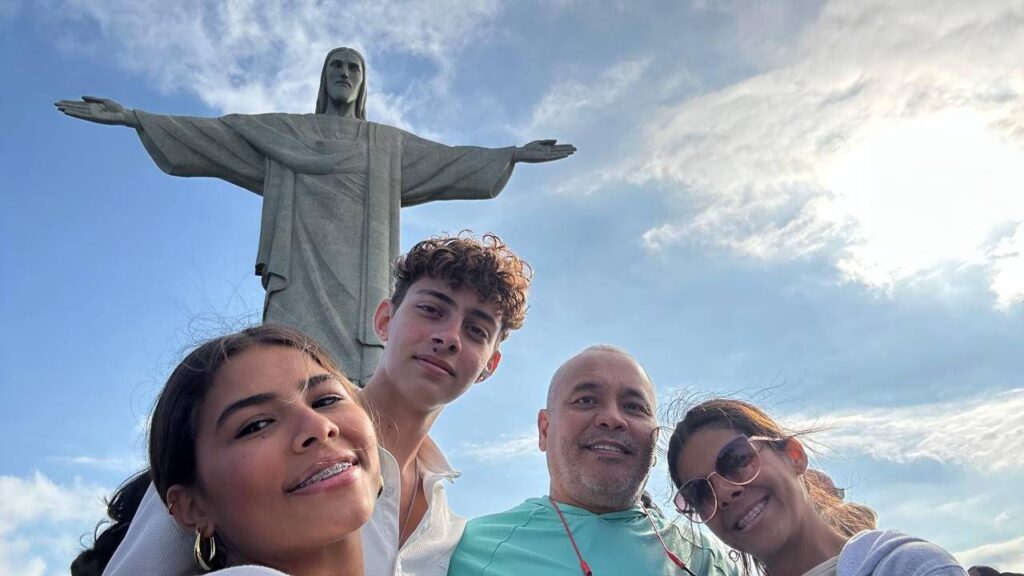
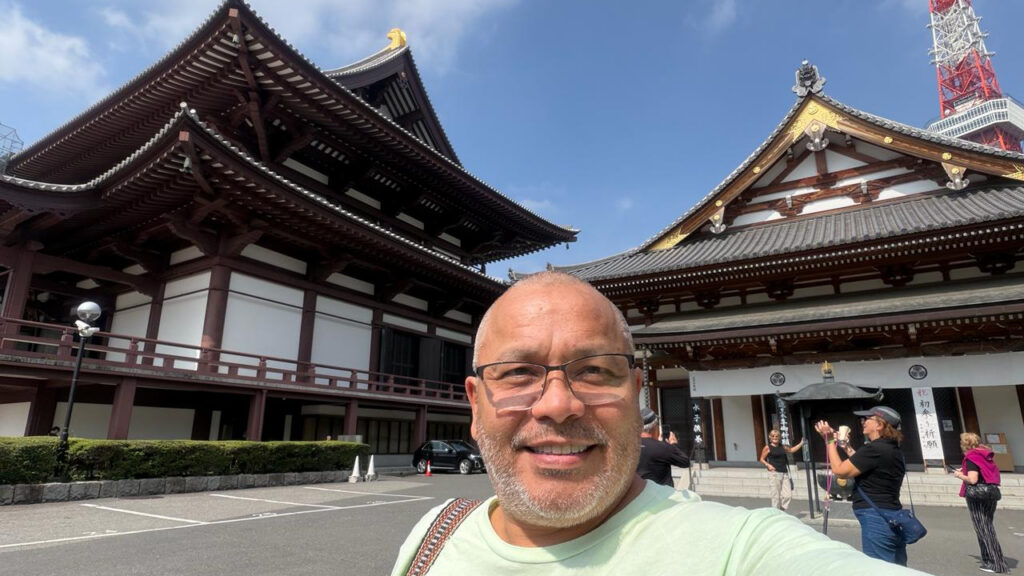
Travel became something he could finally do fully, not in fragments. Over the years, he has moved through countries across the world—India, Peru, Argentina, Brazil, much of Europe, the Middle East—often guided by something simple and personal.
Music.
“I check where my favorite bands are playing,” he says, laughing. “And I plan my trips around that.”
Music has always been part of Alan’s life, but it carries more depth than what’s seen on the surface. From a young age, he showed a natural ability, starting on bass before moving into guitar, supported by a family that made sure he had lessons beyond school. For years, he played regularly in church, building a foundation that stayed with him long after those early days. His musical identity was shaped by the rock bands he grew up with—Santana, Def Leppard, Yes, even songs like Holding Back the Years by Simple Red—sounds that still live in him today. But music didn’t stay fixed in one place. Over time, it began to guide how he moved through the world. Travel and music became connected, with Alan planning trips around where his favorite bands were playing, often choosing countries like Mexico or Brazil, where he could experience those concerts more easily. Now, in this phase of his life, music has come back in a different way. He still carries that rock foundation, but when he plays, he often leans into traditional Latin sounds, sharing music casually with friends or at places like La Lora in San Isidro. It’s no longer something in the background—it’s something he steps into again, naturally, as part of the rhythm he’s created for himself.
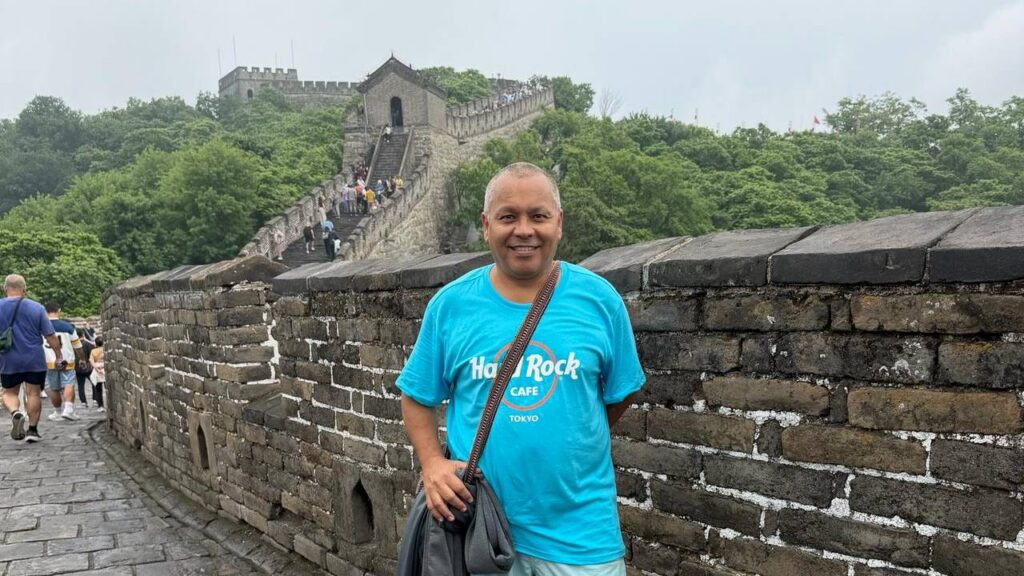
He’s seen six of the seven wonders of the world, and soon the seventh will be crossed off his list.
China is next.
“I didn’t really plan to go,” he says. “But I want to finish all seven.”
There’s something about the way he says it—simple, steady, no rush—that reflects where he is now. Not chasing. Just moving.
Taking care of his health, spending time with his family, watching his twi daughters and son grow—one now the eldest is working as a social worker in Boston, is Son is in San Jose working for Samsung, and the youngest is studying in university—finding balance in a life that for many years was carried heavily.
“I still get tired,” he admits. “But I feel like I’m going in the right direction.”
When you listen to Alan speak about his life, there’s no sense of trying to impress, no need to make it bigger than it is. It unfolds simply—one decision leading to another, one chapter opening into the next. But when you step back and look at it fully, what becomes clear is something much deeper.
He didn’t arrive here looking for a dream that already existed.
He was part of the group of people who made it possible.
From those early trips as a young boy, stepping off a boat into the ocean because there were no roads, no infrastructure, no easy way in… to returning years later with a law degree and choosing to build his life in a place that was still finding its footing… Alan’s path runs alongside the growth of Santa Teresa and Malpaís in a way that can’t be separated.
At a time when land was beginning to change hands and people were arriving with ideas but very little understanding of how to navigate it, he became one of the people who helped bring structure to that process. Not in a loud way, not seeking recognition, but through years of steady work, guiding clients, helping families and businesses establish themselves properly, making it possible for others to build something of their own here.
That matters.
Because today, it’s easy to arrive and feel like you’re stepping into a place that offers a simpler life, something removed from the pace of the outside world. But the reality is, what exists here now was built step by step by people who chose to stay when it wasn’t easy, when there were no services, no guarantees, no clear outcome.
People like Alan.
His story isn’t just about personal success or change—it’s about contribution. About showing up at the right time, recognizing the opportunity, and putting in the work, year after year, to help shape what this community has become.
And now, in this next phase of his life, after 36 years working as a lawyer, there’s something quietly powerful in the way he has chosen to step back, to create space, to focus on health, family, travel, and the parts of life that often get pushed aside in the years of building.
It doesn’t erase what he has done. It completes it.
¨ I would like to say that I am so grateful for all the blessings that God has given me. The first blessing to have Melissa by my side, to have my Daughters and Son, and that God gave me more than I could wish for, I give thanks daily.¨
Alan is one of those people who has lived the full arc of this place—arriving when it was still raw, building alongside it as it grew, and now stepping into a rhythm that reflects everything he has learned along the way.
That is what living the dream looks like here.
Not something handed to you.
Something you build, protect, and eventually learn how to live inside of, in your own way.
And for those who come after, it’s worth remembering where that foundation comes from.
Because without it, none of this exists.
Continue Exploring Santa Teresa
Continue discovering the people and places that have shaped our community:
Moving to Costa Rica: Brett’s Story of Building a New Life in Santa Teresa
Moving to Costa Rica: Nancy’s Journey Through Yoga and Community
Moving to Costa Rica: Yuli’s Story of Building Marpe Jungle Apothecary
Moving to Costa Rica: Roset’s Story of Creating Creativo Culture Center
Moving to Costa Rica: Cholo’s Story Behind Frescazoo
Rain story, history of rain in malpais
Things to Do in Santa Teresa Costa Rica