

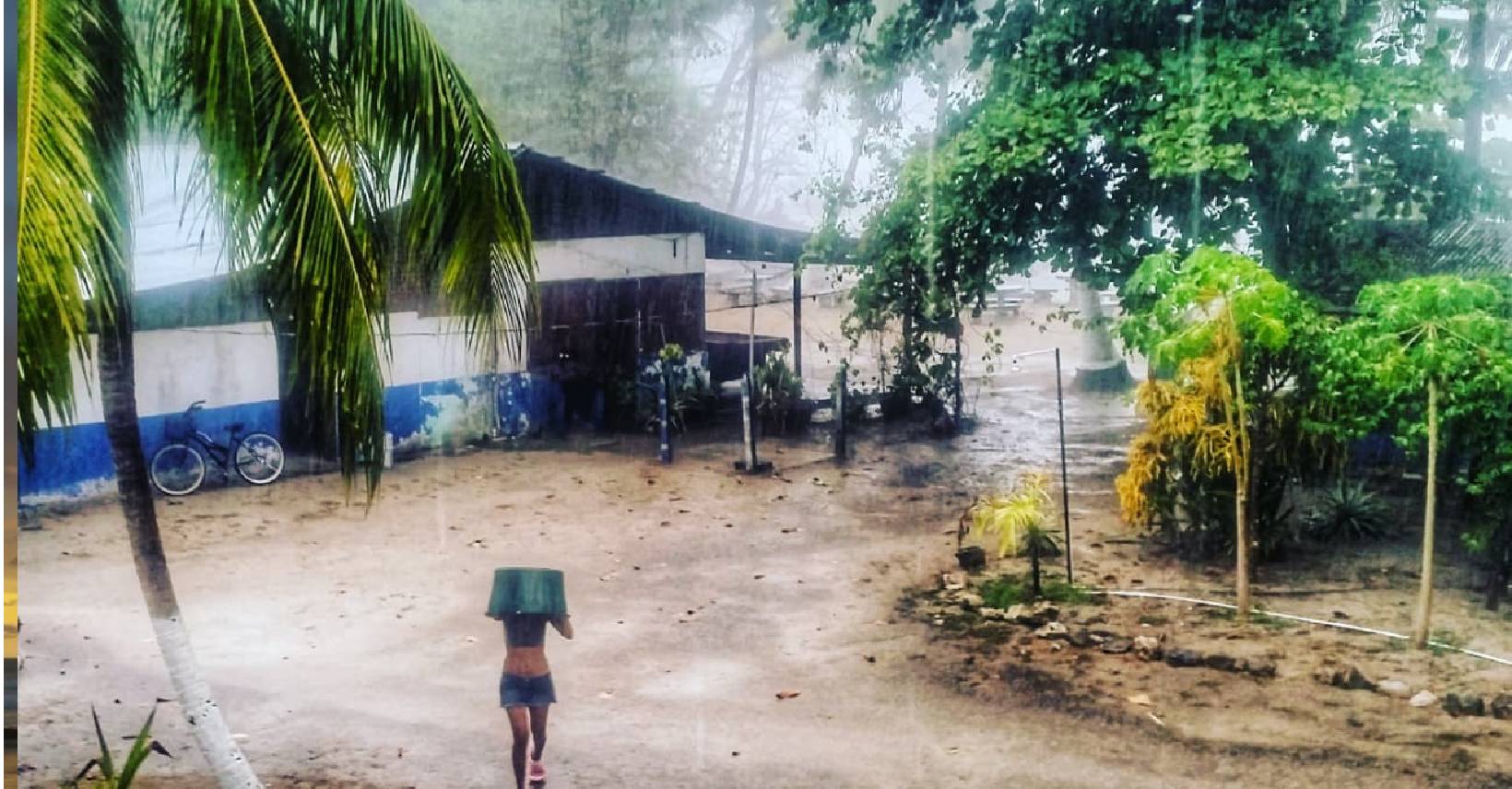
The first rains have finally returned to the coast.
After months of dust, dry riverbeds, sweating through windless afternoons, and watching the jungle wait patiently for relief, the skies over Santa Teresa, Mal País, Playa Hermosa, and Manzanillo have begun their annual transformation.
The scent of wet earth is back.
The frogs are tuning up for their nightly concerts.
The hills are shifting from dusty brown to electric green almost overnight – the kind of green that looks impossible until Costa Rica reminds us that nature was the first to know how to paint.
But this year’s rainy season may not follow the rhythm locals are used to.
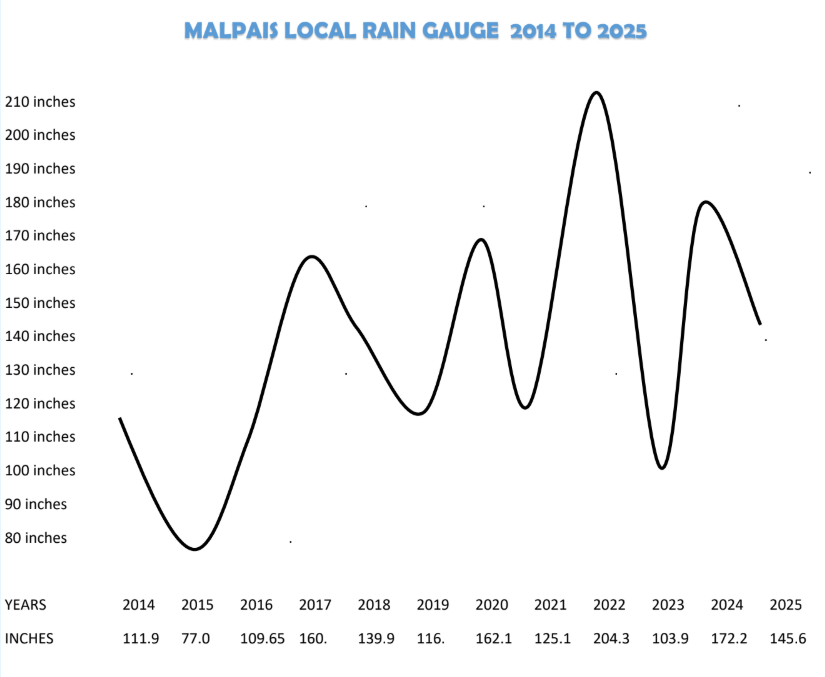
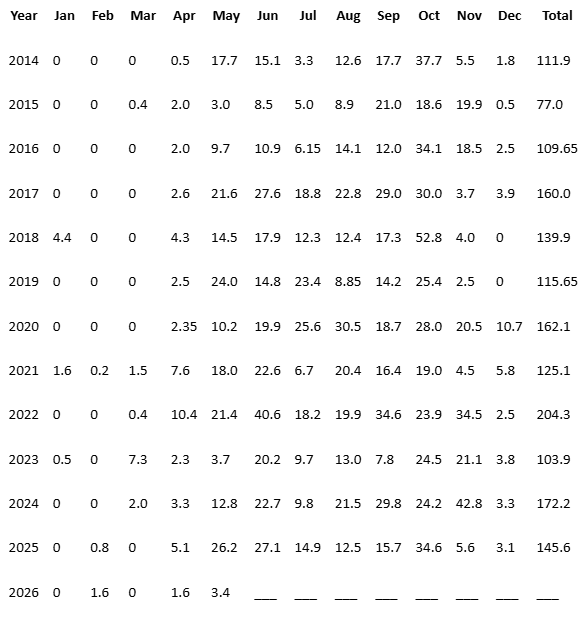
The Changing Rhythm of the Rain: Mal País 2014–2025
Tracking the Rain: From Historic San José to Present-Day Mal País
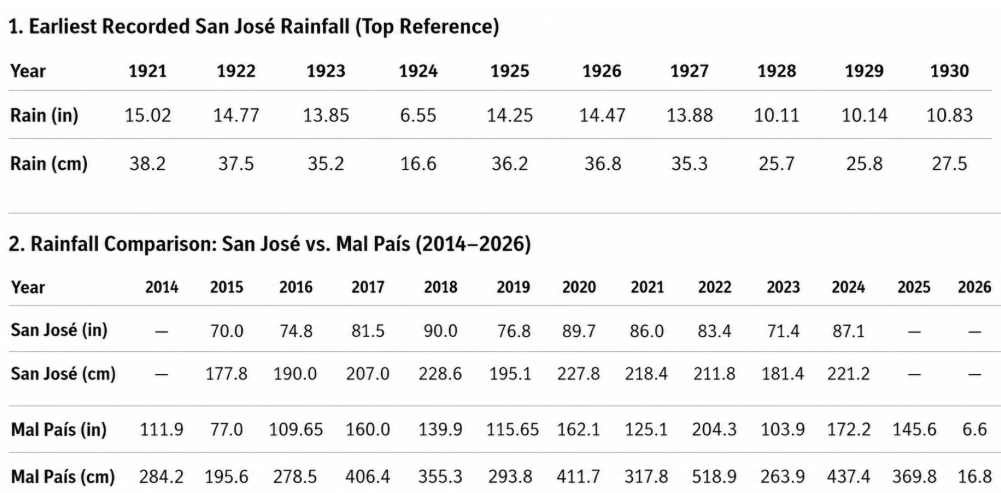
Mal Pais Monthly Rainfall Total (2014 – 2026)
According to projections from Costa Rica’s Instituto Meteorológico Nacional (IMN), meteorologists are forecasting an irregular and weaker rainy season for much of the Pacific coast in 2026, with rainfall totals potentially ending up 10% to 30% below normal.
The developing concern is tied to the possible return of the El Niño climate pattern – the warming of Pacific Ocean waters that historically brings hotter temperatures and reduced rainfall to Costa Rica’s Pacific regions, especially Guanacaste and the Nicoya Peninsula.
Forecasters are warning that the rainy season may arrive unevenly, with long dry gaps between storms, delayed afternoon rains, and less overall accumulation during the heart of the season from September through November.
We can only pray that this is not the case for us this season, because Costa Rica’s weather has a wild spirit and rarely follows perfect predictions. One tropical wave can dump days of rain onto the peninsula overnight. But the broader trend points toward a season that could be hotter, drier, and less consistent than average.
The Pacific slope of Costa Rica normally receives its strongest rains between September and November, with the official rainy season typically running from May through mid-December.
Last year already showed signs of instability in regional rainfall patterns. Across parts of Costa Rica, rainfall totals fluctuated sharply between intense downpours and prolonged dry stretches. Climate researchers continue to note a growing pattern of more extreme weather events rather than stable seasonal balance.
For local farmers, gardeners, surfers, and small business owners, these seasonal shifts matter deeply.
Nature Adapts. So Do We.






A lighter rainy season can mean: Lower water reserves; Increased wildfire risk later in the year; Stress on crops and pasture lands; Hotter ocean and land temperatures; Changes in river flow and well levels; Less predictable surf conditions tied to storm activity.
At the same time, many longtime locals know the green season is never just about numbers on a weather chart.
The rainy season is part of the emotional heartbeat of this coastline.
It slows things down.
It softens the energy after the intensity of high season.
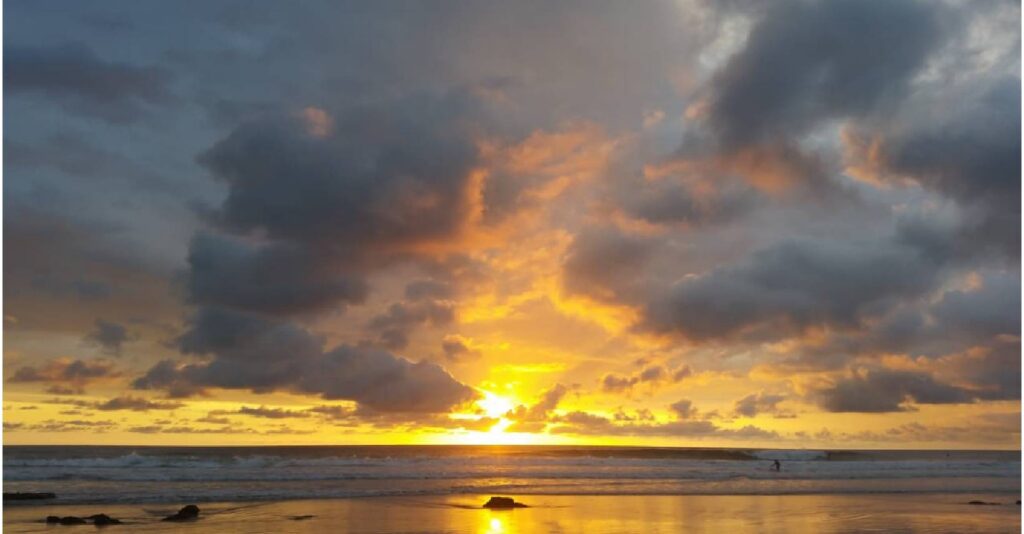
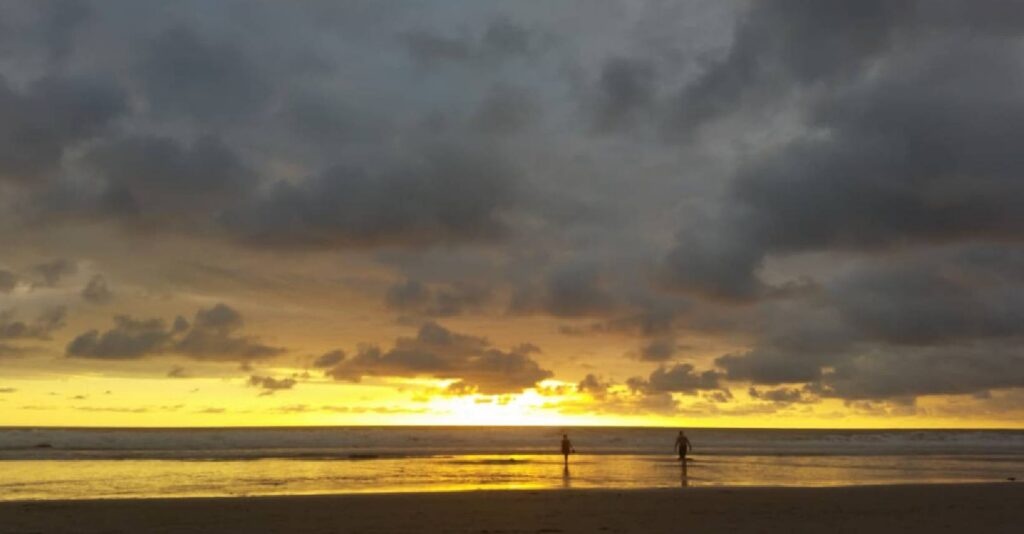
Roads empty out. The jungle breathes again. Mango trees drip with rainwater. Afternoon storms roll over the hills like giant living creatures. The sunsets become dramatic paintings between clouds and sea.
For now, the first rains have arrived.
The dust is settling.
The howler monkeys are louder.
And the peninsula enters another green season carrying both uncertainty and hope – like every year before it.
For nearly two decades, local rain gauge readings collected here on the southern Nicoya coastline have quietly documented the changing rhythm of our seasons. From the heavy green years to the strange dry gaps, the numbers tell a story many longtime residents have already felt in their bones – the rains are becoming less predictable.
Below is a year-by-year look at our recorded rainfall totals, offering both a snapshot of the past and a living record of a changing tropical world.

Mal País Monthly Rainfall Totals (Inches) – Seasonal Curve Dataset
(2014 to current date 2026)
Costa Rica Begins to Keep Record of the Rain
Costa Rica’s relationship with rain was being lived long before it was being measured.
For thousands of years, people living across this land understood the seasons through observation – watching rivers rise, reading mountain clouds, following planting cycles, and adapting life to the rhythm of wet and dry periods. But the first known attempt to formally record Costa Rica’s weather did not begin until the middle of the nineteenth century.
In 1846, a Danish botanist and naturalist named Anders Sandøe Ørsted arrived in Costa Rica and began what would become one of the country’s earliest documented climate studies. His journeys were not comfortable expeditions with paved roads and weather stations. He travelled across rugged terrain from Puntarenas to Limón, moved inland toward the San Juan River, and climbed volcanoes carrying scientific instruments into landscapes that were still largely unmapped.
While documenting plants and geography, Anders also began recording something that had never been systematically captured here before: the climate.
He estimated temperatures, described regional weather patterns, and made one of the earliest known rainfall measurements in Costa Rica in 1847. Those observations became the first written attempts to describe what the seasons felt like in this country.
Then something surprising happened.
After those early observations, nearly twenty years passed with very little formal weather recording taking place. Costa Rica was still developing, and weather remained something experienced more than documented. Farmers, traveler’s, and local communities continued doing what humans had always done – watching the sky and remembering seasons.
By the 1870s, scientific interest in weather began growing.
Costa Rica’s national statistics office started collecting meteorological information, and in 1877 the country joined one of the first international networks for sharing weather data – an early sign that Costa Rica understood something that still feels true today: weather does not stop at borders.
Then, in 1887, the country established its first National Meteorological Observatory under the leadership of Swiss scientist Henri Pittier. One year later, on April 7, 1888, Costa Rica officially created the National Meteorological Institute. Its earliest observations were carried out from the classrooms of the Liceo de Costa Rica in San José. That is where the first systematic records of rainfall and temperature began, laying the foundation for more than a century of climate observation in the country.
Those first measurements were simple compared with today’s technology.
But they began a tradition that still continues – one season at a time, one rainfall reading at a time, one person choosing to look up and pay attention.
Rain chart comparison historical