


A barefoot exploration of Nicoya’s mineral bones, tectonic pressure, and the quiet energy that makes this coastline feel alive.
Quartz and Bones: What Lives Beneath Our Feet Here in Santa Teresa
By Professor Maliek – Santa Teresa Dirt Road Series
Some people look up to find their answers.
Me? I look down.
Not out of habit, but out of reverence. Because what lies beneath our feet here in Santa Teresa — and across Malpaís, Playa Hermosa, and Manzanillo — isn’t just sand and stone. It’s memory. It’s current. It’s color and code and unspoken conversation between the Earth and the people of our past and the present people willing to listen.
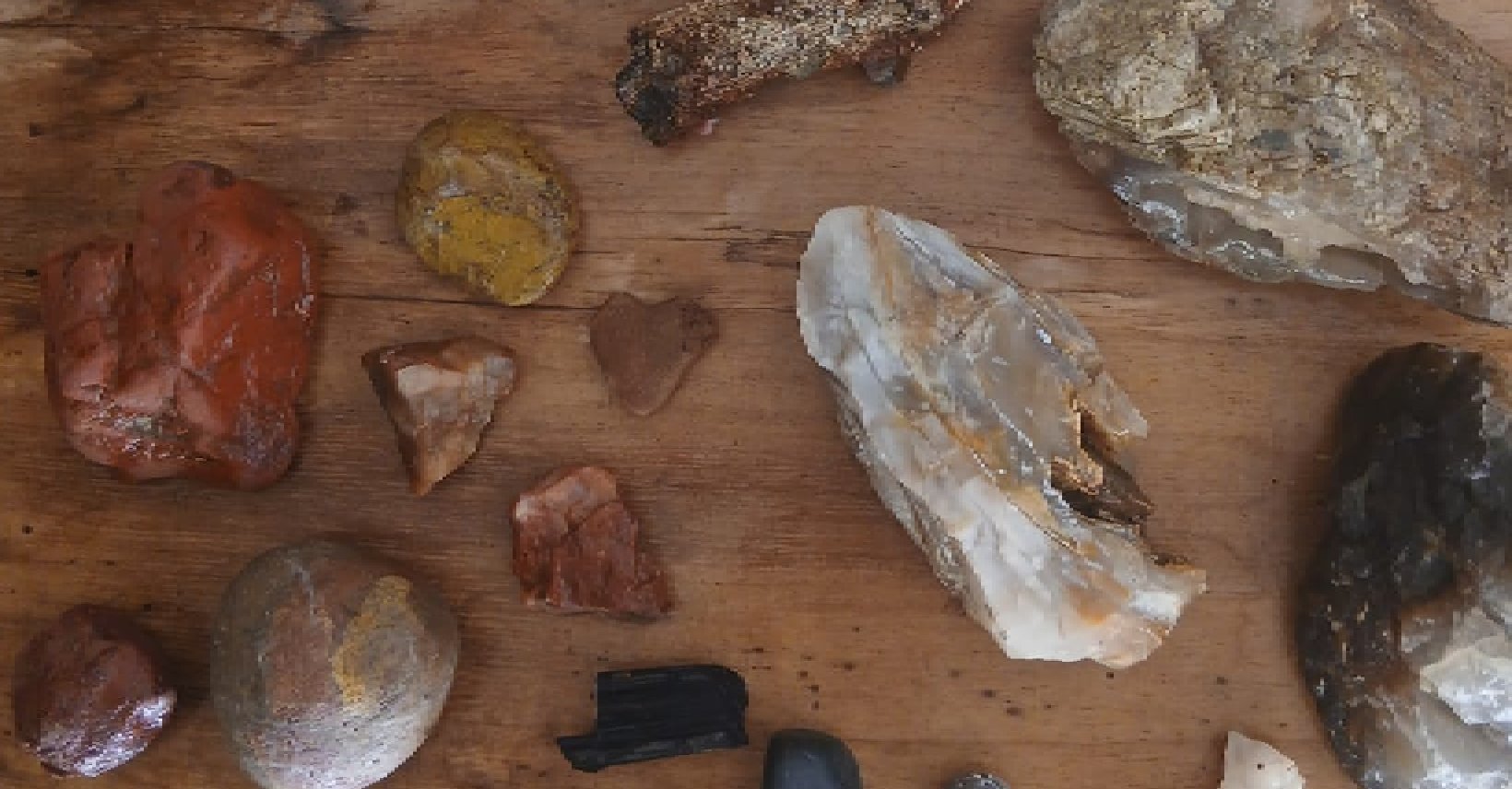
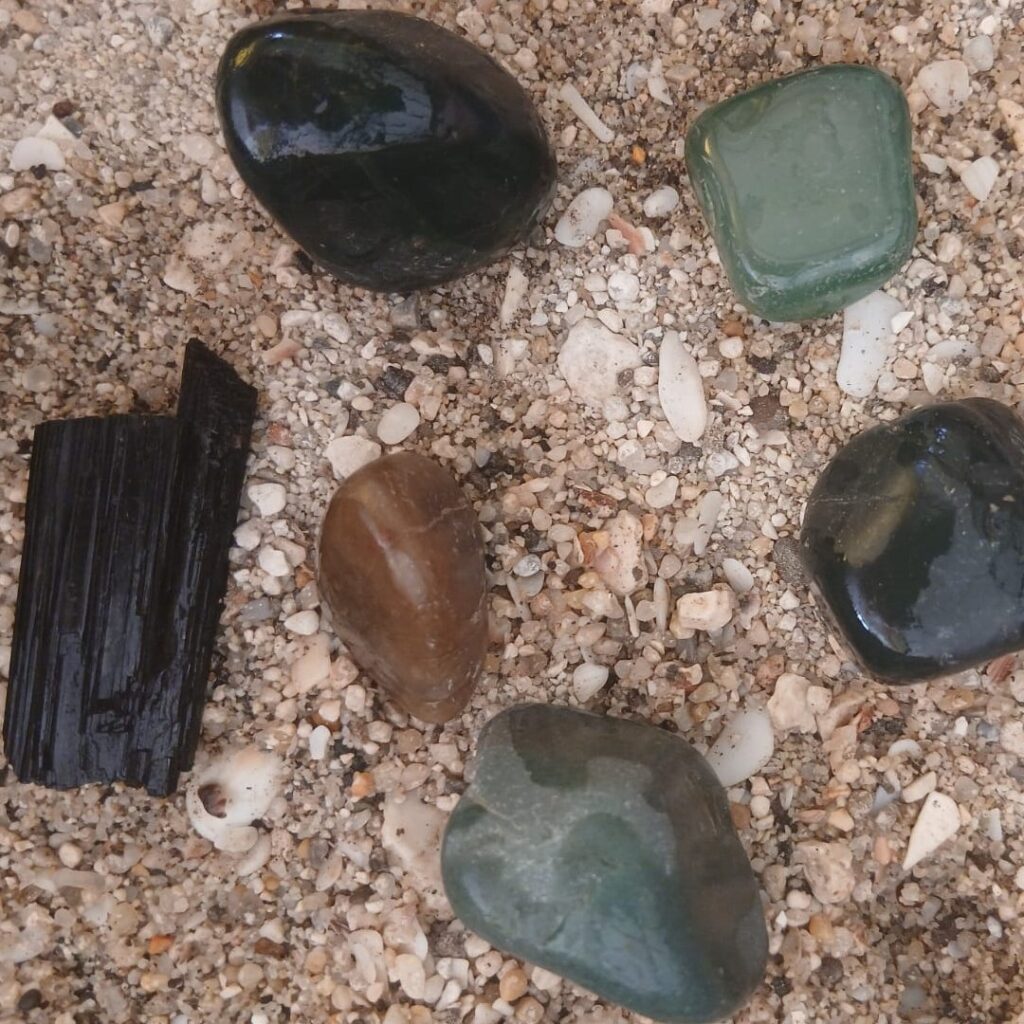
Electrical stone threaded through volcanic rock along the Nicoya coast.





This land doesn’t just sit here quietly.
It holds us. It informs us. It charges us.
A Patchwork of Stone and Story
Walk around long enough, especially after a good rain or during low tide, and you’ll start to notice it — the stones.
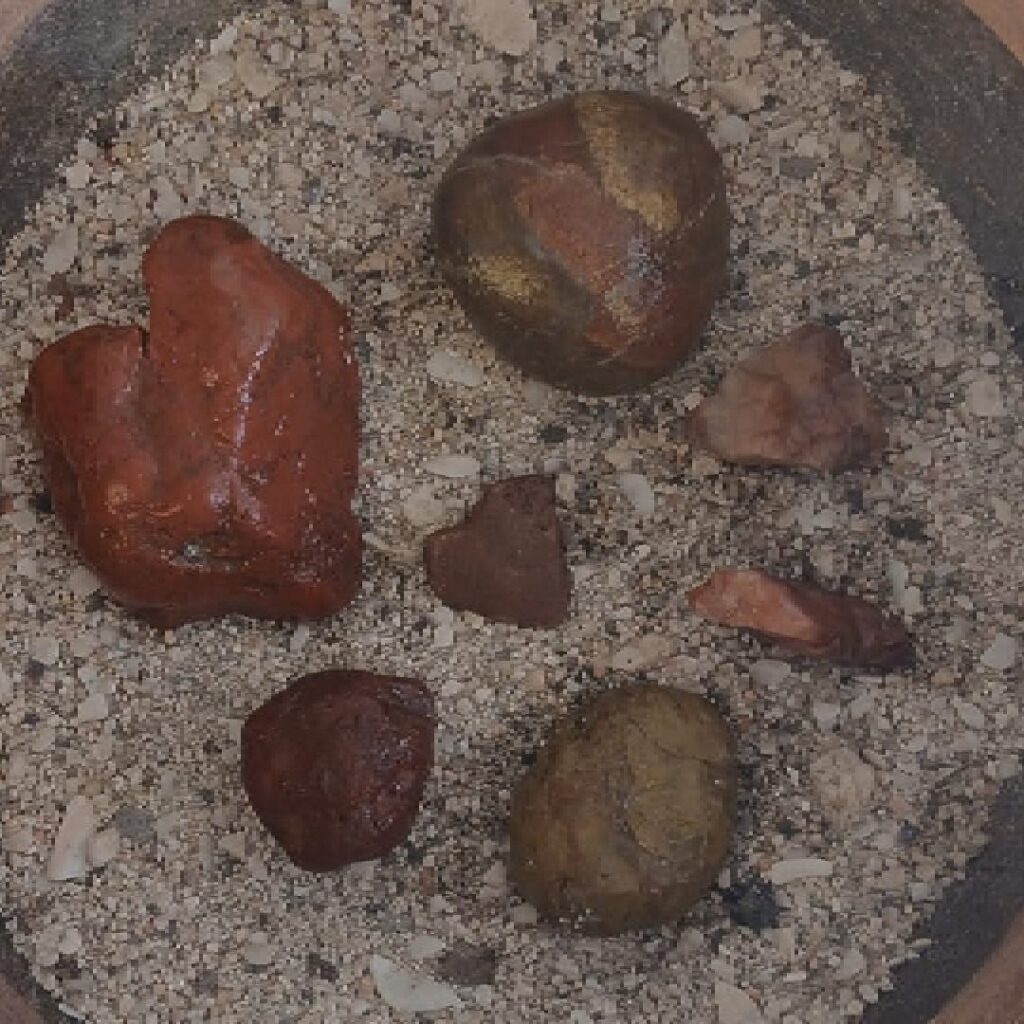
Red. Orange. Yellow, the many colors of Jasper. Deep jungle greens of jade, and Iron-black stones. And those luminous white lines and large deposits of quartz. Some stones are small enough to keep in your pocket. Others look like they could hold the memory of a landslide.
The geological diversity here is exceptional. Much of the Nicoya Peninsula is made up of a rare combination of oceanic and continental crust, known geologically as an accretionary complex — specifically the Nicoya Complex, formed during the Late Cretaceous period, around 85–145 million years ago. It’s a literal geological collision zone, created as the Cocos Plate subducts beneath the Caribbean Plate just offshore.
What does that mean in plain terms?
It means our land was forged under pressure. Volcanic rock, marine sediments, and minerals were smashed together, uplifted, and exposed — resulting in a patchwork of basalt, shale, sandstone, and quartz veins.
And it’s still active. The same tectonic dance that formed the land continues today.
Quartz: The Local Whisperer
Quartz, found almost everywhere here, isn’t just pretty. It has a piezoelectric property — meaning it produces a small electrical charge when compressed. That’s not new-age myth; it’s used in everything from watches to sonar to electronics. It’s why quartz has been a foundational material in our relationship with time and frequency.
Here in Santa Teresa, you can find it embedded in volcanic rock, especially at low tide in Malpaís, Playa Martín, and Manzanillo. Watch for the glowing lines running through black basalt like veins in a living thing.
This local quartz isn’t just ornamental. When combined with the tectonic pressure beneath the peninsula, it becomes part of an ongoing natural circuit — an underground resonance that may explain, in part, why people feel so grounded here, why the nervous system seems to relax, why creative and healing energies seem to thrive
The Energy Beneath, the Ocean Beyond
This region sits directly on the Middle America Trench, a massive subduction zone offshore where earthquakes, tremors, and energy shifts are common. The Nicoya Peninsula is one of the most studied seismic zones in Central America, often monitored by institutions like OVSICORI (Observatorio Vulcanológico y Sismológico de Costa Rica).
All this underground motion creates low-frequency vibrations — sub-sonic pulses that are barely detectable to the ear but deeply felt in the body. These subtle seismic rhythms have been studied for their effects on everything from animal migration to human emotion.
Then we add the Pacific Ocean’s open energy. Facing west, the coast receives long-fetch swells, powerful wave energy, and constant ionization from crashing surf. These negative ions, abundant in ocean air, have been shown in studies to boost serotonin levels, increase oxygen flow to the brain, and promote overall well-being.
So what happens when all these forces combine?
You get a land that charges you quietly.
A coastline that conducts more than light.
And a geology that teaches as much as it holds.
Four Villages, One Shared Foundation
Each of the four villages here has a different feel — culturally, visually, energetically.
- Malpaís is older, wilder, more primal.
- Santa Teresa moves fast, electric, creative.
- Hermosa spreads out in busy zones..
- Manzanillo remains untouched, a slow-breathing rhythm.
Yet they all sit on the same mineral base — that complex, quartz-veined volcanic crust, resting above shifting tectonic plates and below the magnetic push of the sea.
That’s no small thing. It’s why you can feel similar energies — even amidst the differences. It’s why certain sunsets feel like remembering. Why walking barefoot feels like plugging into something real. Something ancient.
A Closing Thought
So next time you find a stone glowing in your hand — red like fire, green like jungle shadow, clear as quartz — pause.
That rock didn’t just end up here.
It was forged by ancient volcanoes, carried by time, cracked open by water, and revealed just for this moment.
It is a relic of Earth’s deeper conversation — and if you listen, it just might remind you of something you already know.
Until next time,
Prof. Maliek
Southern Nicoya Resident | Observer of Earthly Phenomena | Collector of Questions