



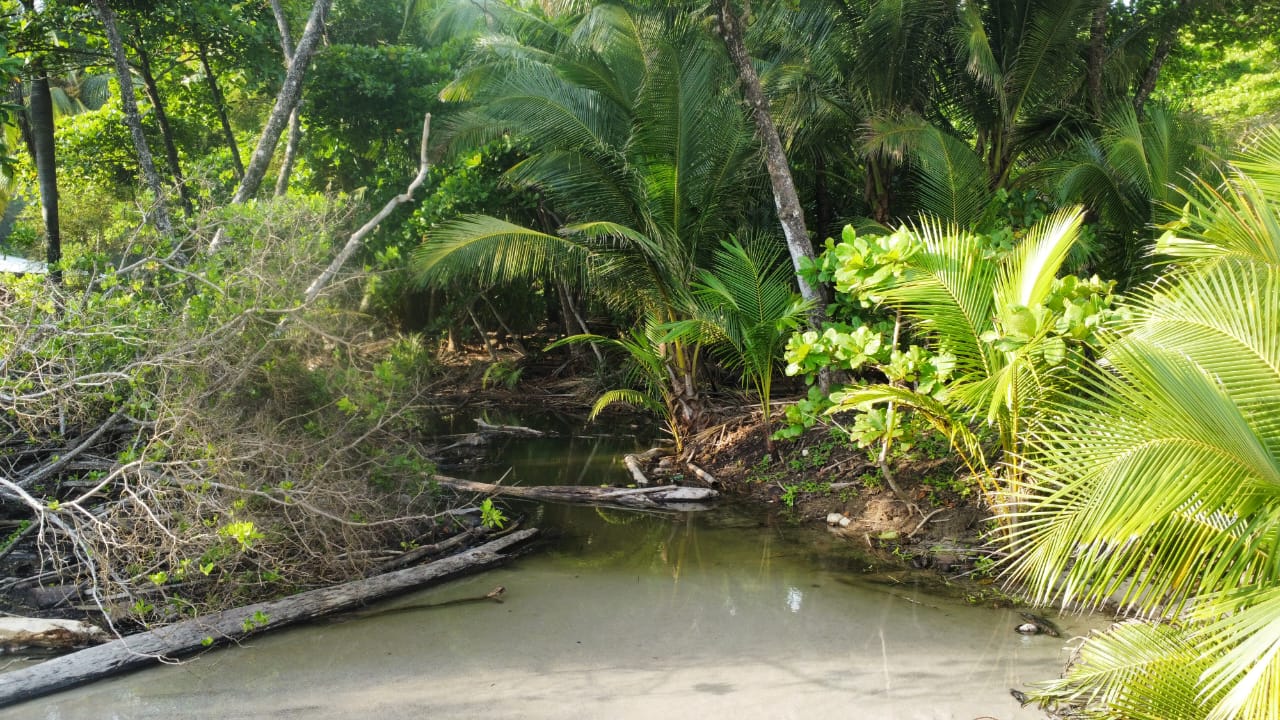
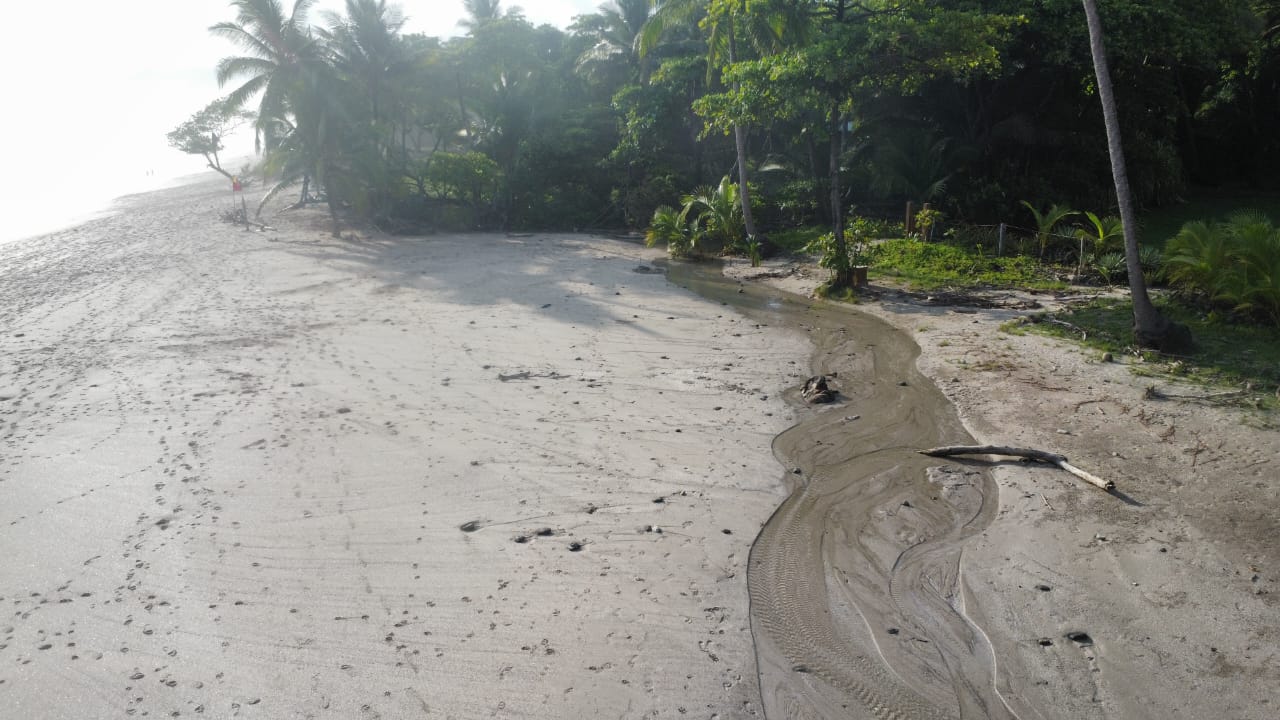
As the rains return and rivers swell with fresh mountain runoff, the sight of a narrow river ribboning through sand and meeting the sea is tempting. In Santa Teresa, Playa Hermosa and Malpais these river mouths can look like calm, shallow pools — perfect for a lazy afternoon. But the calm surface can be misleading.






Even in crystal-clear water, bacteria and microbes are present. Dr. Bill Sullivan, microbiologist
Why river mouths can be risky
River mouths are natural collection zones for organic debris — fallen trees, leaves, bark and other jungle matter washed downhill. As this material decomposes it becomes a nursery for microbes and bacteria. Warm, shallow water where fresh and salt meet creates ideal conditions for these organisms, many of which are invisible but can affect small immune systems.
Common effects for babies, toddlers, and dogs
- Skin rashes or irritation
- Eye redness or excessive watering
- Respiratory irritations or sniffles
- Upset stomach, vomiting, or diarrhea
- Minor wound infections (especially if skin is broken)
A note about dogs
Dogs love to splash and roll — and then lick their fur. That behavior combined with open cuts or scratches can increase risk. Vets often see more minor infections during rainy seasons; often the source is natural water exposure, not human waste.
Nature’s balance — and our small adjustments
This isn’t about scaring people away from nature — rivers bring vital nutrients to mangroves and marine life. It’s about respecting natural rhythms and making a tiny change: spread your blanket away from murky river mouths. Let babies dig in the dry sand and splash safely in the shallow surf. Let dogs fetch sticks from the ocean, not the jungle brew.
Small adjustments = healthier kids, happier dogs, and a more respectful relationship with the wild rhythms around us.