



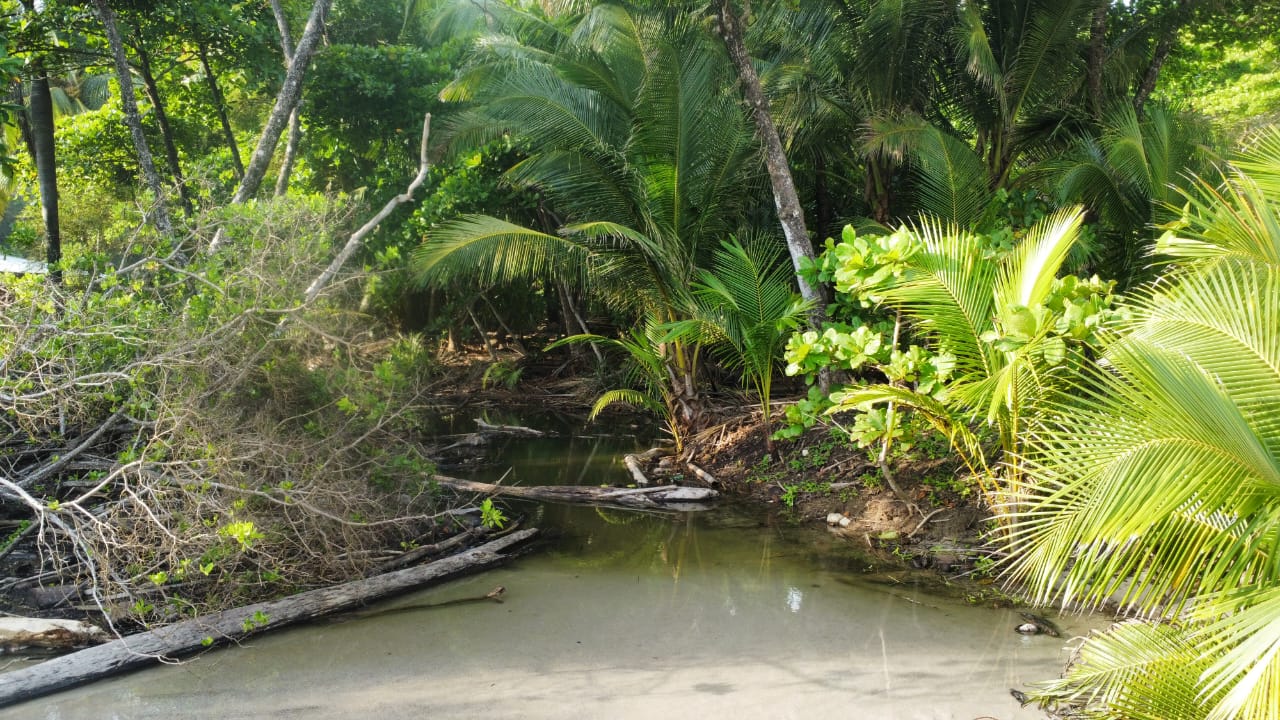
As the rains return and rivers swell with fresh mountain runoff, it’s easy to be enchanted by the sight of flowing water winding its way through the sand to meet the sea. In the tropical paradise of Santa Teresa, Playa Hermosa, and Malpais, river mouths often look like serene, shallow pools — ideal spots for families to set up beach chairs and let the little ones splash around.
(Video by The drone guy)
But don’t let the calm surface fool you.
These river mouths — where freshwater from the hills meets the salt of the ocean — are natural collection zones for organic debris: fallen trees, rotting leaves, dying plants, and other vegetative matter that’s been swept downhill by the rains. This mixture brews a potent cocktail of decomposing material, giving rise to naturally occurring microorganisms and bacteria that aren’t visible to the naked eye — but can have a real impact on health.
“Even in crystal-clear water, bacteria and microbes are present,” says Dr. Bill Sullivan, microbiologist. “Many pathogens thrive in these zones of warm, shallow water where fresh and salt water meet.”
Natural River Mouth Contamination: A Hidden Ecosystem
This isn’t about black water or human contamination — this is Mother Nature doing her thing. And while it’s part of the vital cycle of life and decay, it’s not always the best place for small immune systems.
When rivers carry high concentrations of decomposing organic matter — wood, bark, jungle floor debris — they become rich breeding grounds for microorganisms like bacteria and protozoa. These can easily find their way into your child’s eyes, ears, mouth, or small skin abrasions.
For babies, toddlers, and even dogs, exposure to these microorganisms can result in:






- Skin rashes or irritation
- Eye redness or watering
- Respiratory issues or sniffles
- Upset stomach or diarrhea
A Note on Dogs and River Water
Dogs love to romp and roll in river pools. But just like children, they are vulnerable to the effects of microbial contamination. If your pup is licking their fur post-swim or has open wounds, they’re especially at risk.
Veterinarians often report an uptick in minor infections during the rainy season — and natural river water exposure is often to blame.
“You don’t need human waste to cause illness,” says a local environmental health consultant. “Rotting vegetation can feed a microbe population that overwhelms a small immune system just as easily.”
Simple Practices for Staying Safe
If you or your family enjoy the riverside, may we suggest these easy practises — just with a bit more awareness.
- Avoid letting babies, toddlers, or dogs play at the river mouths, especially after heavy rain.
- Don’t trust clear-looking water. It may still contain high microbial loads from natural decomposition.
- Rinse thoroughly with fresh water and soap as soon as you return home.
- Dry ears and clean skin folds on babies and dogs to prevent irritation or infection.
Nature’s Balance and Our Responsibility
This article reminds use of our respect for the Nature we are surrounded by, and inturn brings us Back to Basics to keep everyone safe. It’s about understanding the rhythms of our natural world — and adapting to live in harmony with it.
The rivers that reach our beaches are vital corridors of life, carrying jungle nutrients out to sea, supporting mangroves and marine life. But during the rainy season, they become organic hot spots of decomposition — not kiddie pools.
So spread your blanket away from the murky river mouths. Let the babies dig in the sand and splash in the shallows of the sea instead. Let the dogs fetch sticks from the surf, not from the jungle water brew.
It’s a small adjustment that supports a much bigger goal: healthy kids, happy dogs, and a respectful connection to the powerful processes of nature.